
Finding reliable TradingView indicators and automated scalping tools that deliver consistent signals for fast markets is difficult. Many systems repaint signals or require complex scripting and fragmented automation setups, making entries and exits unreliable or slow. This comparison breaks down price, automation, and signal scope across four TradingView indicator platforms, so traders can match the right workflow to their pace.
Table of Contents
Scalping-Algo
At a Glance
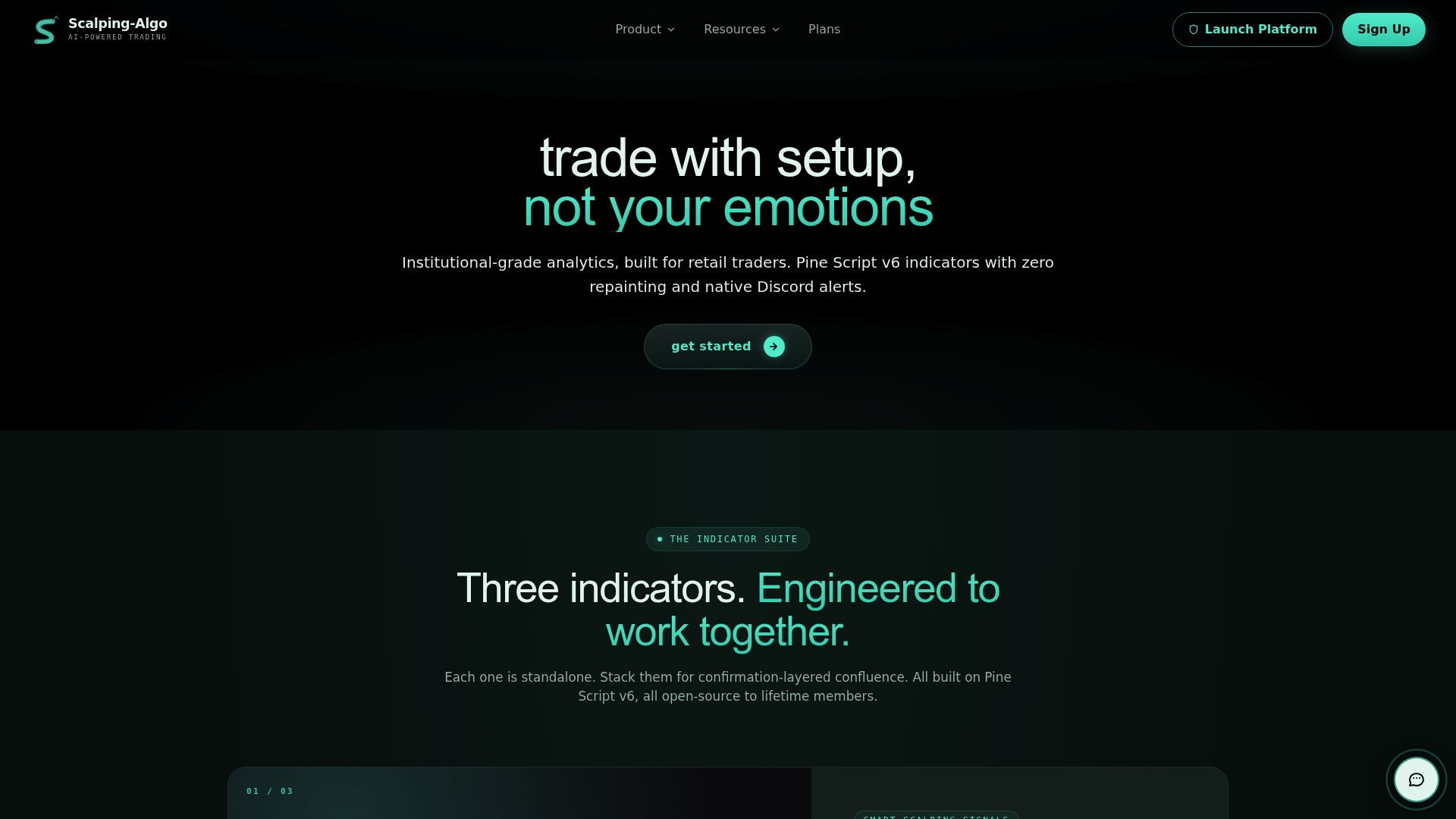
Indicators deliver real-time, non-repainting buy and sell signals tuned for 1m–15m timeframes. The system pairs three standalone Pine Script v6 modules to reduce false signals. Native Discord webhook alerts and a Command Center consolidate alerts, backtesting, and live mentorship.
Core Features
Three indicators work together: Smart Scalping Signals, Edge Finder, and Momentum Oscillator, producing confluence-driven entries. The scripts use Pine Script v6 with strict type safety and built-in projected TP and SL levels for clear risk management. Adaptive volatility gating uses ATR and multi-timeframe confirmation to filter chop and highlight higher probability setups while native webhooks push alerts to Discord for automation.
Key Differentiator
Built on Pine Script v6 with no repainting and native webhook alerts, ensuring reliable, time-stamped signals that integrate directly with Discord and automation pipelines. Confluence filtering across indicators and timeframes further reduces spurious signals and supports faster decision making.
Pros
The indicators are non-repainting and open for public version history, so you can audit changes and parameter tweaks. Integration with TradingView alerts plus native webhook payloads allows you to automate execution or forward alerts to bots and trade managers. The platform combines projected TP/SL, ATR-based volatility gating, and multi-timeframe confirmation to tighten entries and exits. Community features include live mentorship and a Discord hub for trade discussion and practical feedback.
Cons
- Requires active monitoring or an automation workflow such as Discord webhooks to capture signals in fast markets; it is not a fully hands-off automated system.
Who It's For
Traders focused on short-term scalping and faster swing setups across crypto, forex, indices, commodities, and stocks. Those who want systematized, low-timeframe signals and the option to automate alerts will benefit most. Traders new to live execution will value mentorship and the Command Center for backtesting.
Unique Value Proposition
Native webhook alerts to Discord combined with open-source Pine Script v6 code turn chart signals into executable workflows. The Command Center ties alerts, backtesting, and projected TP/SL into a single control surface so you can convert a high-confidence setup into an automated trade or a documented manual entry.
Real World Use Case
A trader runs the Smart Scalping Signals on a 1-minute ES futures chart and receives an instant Discord alert for a high-confidence setup. They use the charted TP and SL levels to size the position, validate confluence with the Edge Finder, and record the trade in the Command Center for a backtest session. Live mentorship clarifies trade management during volatile sessions.
Pricing
Monthly: $79/mo billed monthly. Yearly: $799/yr billed annually. Lifetime: $1,999 one-time payment. Yearly and lifetime plans are final sale and non-refundable, so test the monthly plan before committing.
Website: https://scalping-algo.com
LuxAlgo
At a Glance
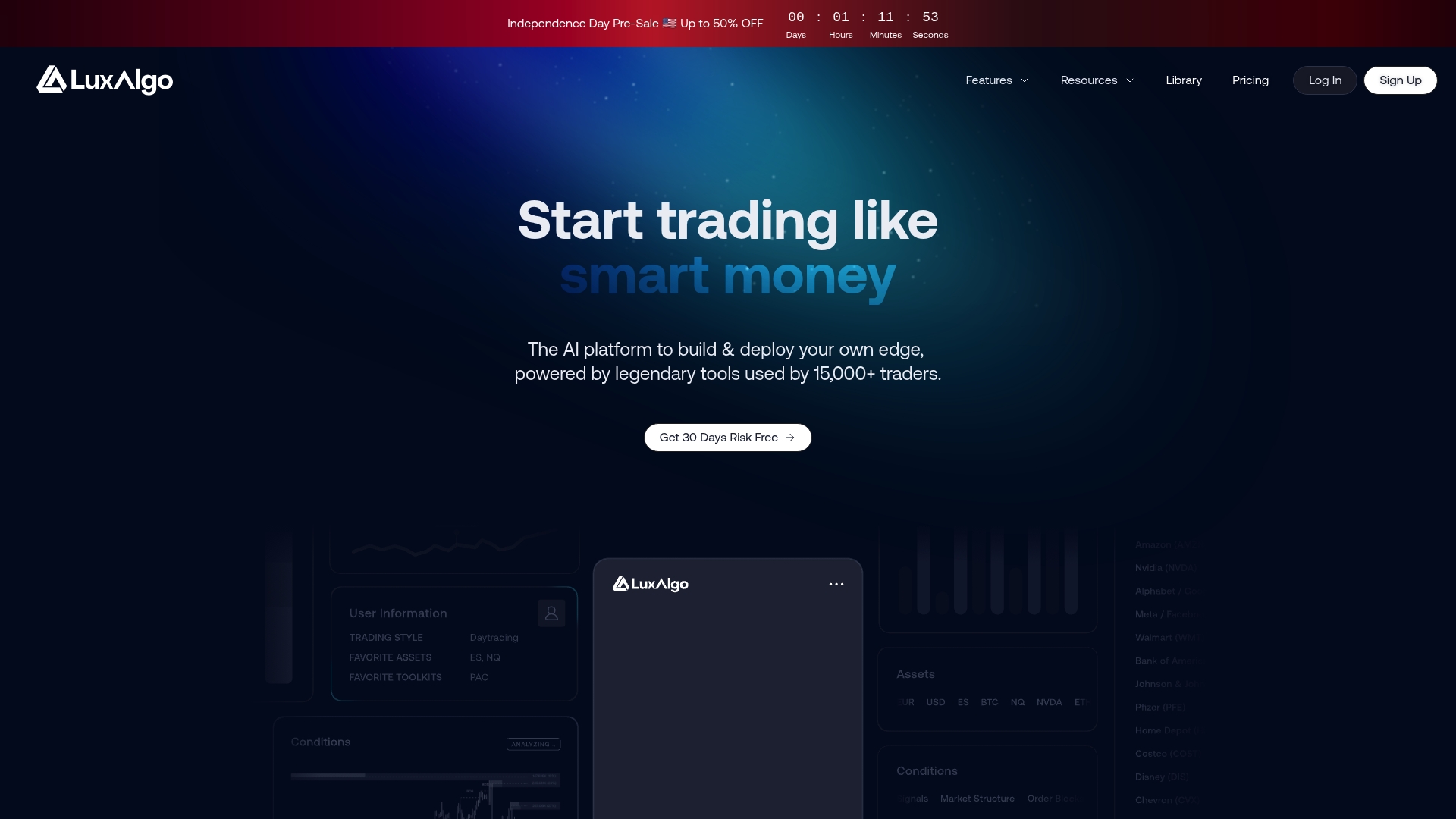
Monthly plans start at $50.99 for Premium and $77.99 for Ultimate. LuxAlgo centers on AI powered indicator design and an AI Backtesting workflow that moves prototypes toward live alerts. Traders route real time signals via webhooks or email to downstream execution tools.
Core Features
The suite includes an AI builder called Quant that helps you create and tune custom indicators and strategies without starting from scratch. It offers AI Backtesting for automated strategy simulations and parameter optimization, plus the Algos indicator suite for alert generation. Real time signals can be delivered through webhooks or email so you can link alerts to execution workflows on TradingView.
Key Differentiator
LuxAlgo emphasizes machine guided strategy creation rather than only manual chart overlays. The platform combines iterative AI suggestions with backtester feedback so you refine entries and exits quickly. That focus targets traders who prefer algorithmic refinement paired with visual chart tools.
Pros
AI driven tools reduce time spent on scripting and make experimentation faster for strategy builders. The indicator suite, alerts, and backtesting sit in one product, which cuts context switching when you move from idea to live alerts. An active learning community and educational content help bridge the learning curve for traders scaling from indicators to automation.
Cons
- Premium tiers carry a monthly price that may be high for solo traders.
- Advanced features assume familiarity with Pine Script® and trading platform workflows, lengthening onboarding time.
- Full automation depends on TradingView for broker linking and execution, adding a platform dependency.
When It May Not Fit
If you only need simple indicator overlays or occasional alerts, the feature set will feel overbuilt. Traders who avoid scripting or do not want to route signals through TradingView will find extra friction. Budget conscious traders who do not plan to use automation may not justify the monthly cost.
Who It's For
Traders and investors who build and test strategies and want AI assistance will benefit most. Developers and systematic traders who use Pine Script® can exploit Quant and the backtester to accelerate iteration. Beginners seeking only free indicators or very simple alerts will likely prefer lighter tools.
Real World Use Case
A professional trader backtests an intraday breakout strategy across crypto and stocks using AI Backtesting to compare parameter sets quickly. Algos alerts fire to webhooks and trigger a TradingView linked execution bot for order placement. The trader iterates inside Quant until the rules match risk limits and live signal cadence.
Pricing
Monthly pricing starts at $50.99 for Premium and $77.99 for Ultimate. The vendor states discounts are available for longer term subscriptions. A free tier is not publicly listed.
Website: https://luxalgo.com
AlgoAlpha
At a Glance
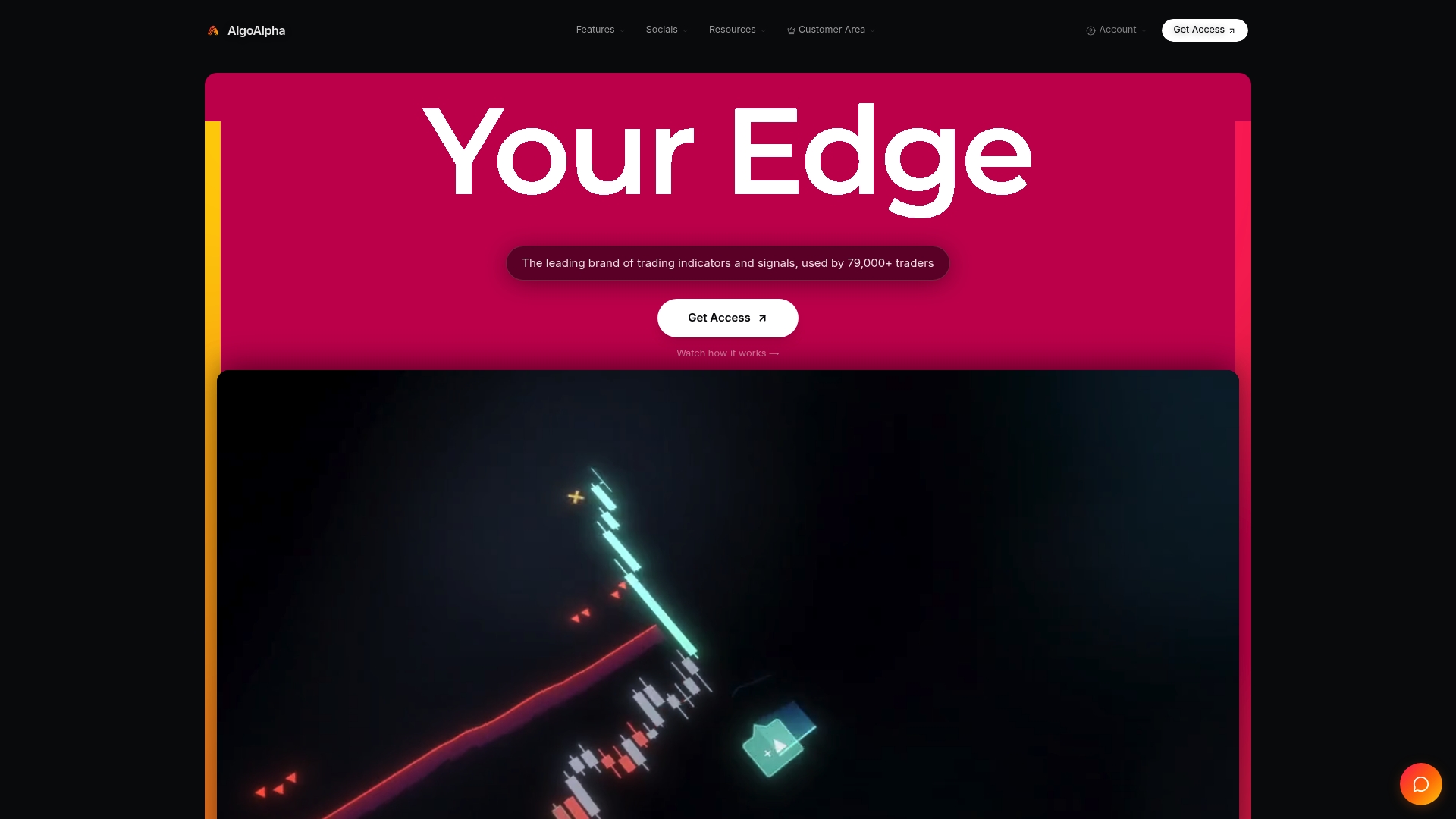
AlgoAlpha reports over 79,000 active traders worldwide. This figure comes from the vendor's marketing materials. The platform combines indicators, automated signals, and no-code execution within TradingView.
Core Features
The product bundles four TradingView indicators including Smart Signals Assistant and Strategy Builder, plus momentum and structure tools. It delivers automated crypto signals and Echo™ automation for auto-execution on supported exchanges. An AI Backtester lets you test strategies across historical market conditions without writing Pine Script.
Key Differentiator
AlgoAlpha centers its value on an all-in-one workflow that links signals to execution inside TradingView. Echo™ automation lets traders route signals to exchanges without external middleware. That integration reduces the number of separate tools you must manage.
Pros
A large community supports the platform and its learning resources, which shortens the onboarding curve for new traders. TradingView awards and the vendor's feature set suggest professional-grade tooling and active development. No coding is required, so traders can apply indicators, run the backtester, and turn on Echo™ automation quickly.
Cons
- Some users report false signals or varying accuracy, which requires cautious position sizing and verification before automated execution.
- Subscription costs rise notably for VIP bundles and automation, making the full feature set expensive for casual traders.
- Automation currently targets a limited set of exchanges, so your preferred venue might not be supported.
- Full automation requires a funded exchange account and API setup, which adds operational complexity for some traders.
When It May Not Fit
If you only need a single indicator or occasional market scans, the subscription tiers may be excessive. Traders who use unsupported exchanges will miss Echo™ execution benefits. Beginner traders without a funded account may find the API setup and automation steps cumbersome.
Notable Integrations
Integrations include thinkorswim, Binance, Bybit, MEXC, and Bitget. Exchange connections support order routing for Echo™ automation on supported venues. The TradingView integration keeps indicators and signals native to that charting environment.
Who It's For
Serious crypto traders and investors who want institutional-style indicators paired with execution tools. Traders who do not code but want automated signal execution will get the most value. Analysts who need AI-backed backtesting inside TradingView will also benefit.
Real World Use Case
A retail trader runs AlgoAlpha indicators on Binance charts and activates Echo™ to auto-execute scalps. The trader uses the AI Backtester to refine entry filters and adjust stop logic. Live execution reduces missed entries during fast moves.
Pricing
Pricing splits by feature set. Indicators start at $28.72/mo or $344.64/year. The VIP Bundle lists $79.32/mo or $951.84/year, and signals cost $64.37/mo or $772.44/year. All plans include community support.
Website: https://algoalpha.io
Excavo bundles multiple TradingView indicators into every subscription tier, including Confluence Engine PRO, Supply & Demand Zones PRO, and Daily Volume Profile PRO. The tools detect institutional activity, map order blocks and fair value gaps automatically, and highlight session volume distributions while filtering market noise. Real time Telegram alerts and step-by-step trading guides round out the package.
QuantConnect
At a Glance
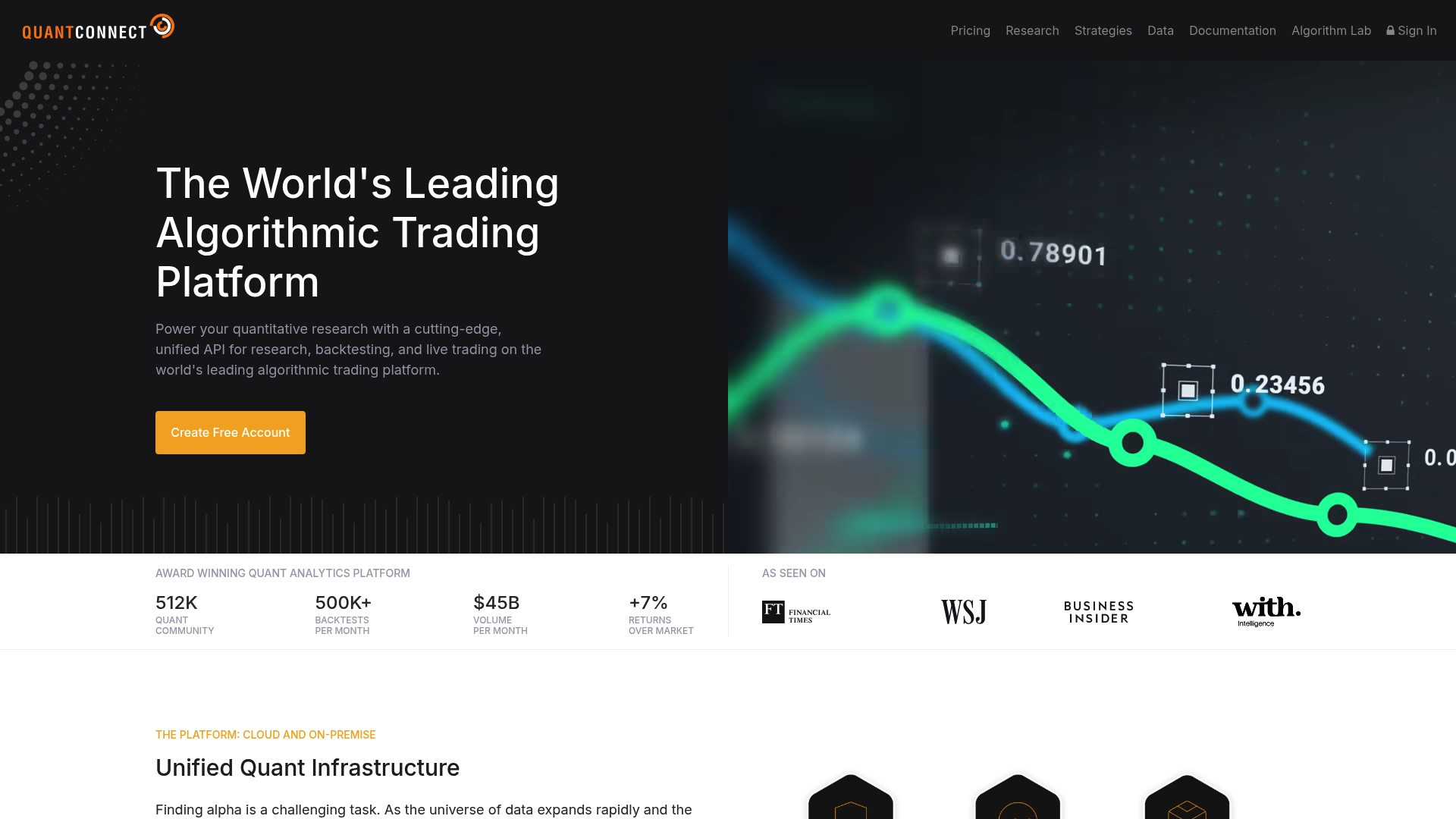
An open source LEAN engine runs in both cloud and on premises environments. QuantConnect reports a large community of quants and researchers. That combination supports research workflows that move directly into live execution across multiple asset classes.
Core Features
QuantConnect delivers a single Unified API for research, backtesting, optimization, and live trading, with programmable access to data and execution. The platform exposes a rich dataset marketplace and collaboration tools for team projects and permissions management. Cloud based tooling and the ability to run LEAN locally let teams scale tests and production independently.
Key Differentiator
The open source LEAN engine plus a community driven ecosystem sets QuantConnect apart. That design lets teams inspect, modify, and extend core trading logic rather than rely on closed code. The mix of cloud and on premises deployment options gives research groups flexibility in cost and compliance choices.
Pros
QuantConnect bundles research and production in one environment, so strategies move from prototypes to live execution without major rewrites. The platform offers broad data access and a dataset marketplace that makes alternative sources easy to test. Community contributions and an open source engine let teams adapt algorithms and infrastructure to specific trading needs.
Cons
- The platform has a steep learning curve for traders new to algorithmic development.
- Pricing can be high for advanced plans that require large compute or data allocations.
- Some brokerages and niche data sources have limited integration support.
When It May Not Fit
Teams that expect a plug and play trading console will struggle with the development focus. Small retail traders with minimal compute needs may find the resource costs disproportionate. Groups that require broad, native integrations with every boutique broker should verify support before committing.
Notable Integrations
QuantConnect supports execution with major brokerages and crypto venues for live trading. That connectivity covers traditional and digital markets. Primary integrations include:
- Interactive Brokers
- Alpaca
- Binance
- Kraken
- Charles Schwab
- Tastytrade
- Tradier
- TradeStation
Who It's For
Quantitative research teams, institutional trading desks, and experienced individual quants who build and deploy algorithmic strategies benefit most. Teams that need code access to infrastructure and those requiring on premises deployment will find the platform suitable. Less experienced traders may need training before productive use.
Real World Use Case
A quant fund develops multi asset strategies using large datasets and custom models. Researchers iterate in the cloud, run parallel backtests, and then deploy selected algorithms to live execution through supported brokers. The open source engine lets the fund add firm specific risk checks before production.
Pricing
QuantConnect lists plan details and costs on its pricing webpage. Plans vary by compute, data access, and deployment model, so teams should review pricing based on expected data and runtime needs.
Website: https://quantconnect.com
Comparison of alternatives
Scalping-Algo distinguishes itself in its focused approach to delivering reliable signal generation and execution integration for high-speed trades. However, alternative platforms like LuxAlgo and QuantConnect satisfy distinct needs, particularly given LuxAlgo's AI integration and QuantConnect's scalable algorithm development.
Decoding trade execution efficiency
Scalping-Algo implements advanced discord-integrated scalp tools, reducing the risk of late entries. Meanwhile, AlgoAlpha focuses on overall usability, although its automation requires strict API configurations.
AI-enhanced strategy development
LuxAlgo introduces the Quant platform, which applies AI modeling to accelerate the iterative design workflow for trader strategies. This dimension is for scenarios seeking rapid optimization without manual scripting.
Best fit
- Fully engaged traders aiming to scalp effectively amidst high-speed market fluctuations.
- Systems using Discord-based alerts and immediate integration benefit from Scalping-Algo's feature set.
- Algorithm designers often wishing to iteratively refine rules optimize and integrate ideas thanks into [not-good "iteration-ing / just different flow specific"]
Our pick
When evaluating trading strategy platforms, comparing features, pricing, and unique capabilities provides insight into the best fit for your needs.
| Platform | Key differentiator | Unique value | Pricing | Notable limitation |
|---|---|---|---|---|
| Scalping-algo | Pine Script v6 integration without repainting | Enables automated workflows via Discord webhooks | $79/mo | $799/yr |
| LuxAlgo | AI-assisted strategy creation | Combines AI backtesting and alert routing | $50.99/mo (Premium) | Advanced features assume familiarity with trading platforms |
| AlgoAlpha | Integrated signal and execution workflow | Echo™ automation routes signals directly for execution | $28.72/mo (basic indicators) | Limited exchange support for automation |
| QuantConnect | Open-source LEAN engine framework | Flexible deployment environments: cloud or on-premises | Price not published | Steep learning curve for algorithmic development |
Choosing an Effective ActiveQuants.com Alternative for Short-Term Traders
Short-term scalping traders often face challenges capturing timely, reliable signals and managing rapid entries across crypto, forex, and futures markets. Scalping-algo turns these challenges into strengths with real-time non-repainting indicators designed for 1m–15m timeframes. Its Pine Script v6 modules deliver confluence-driven signals combined with adaptive volatility filters and built-in risk management.
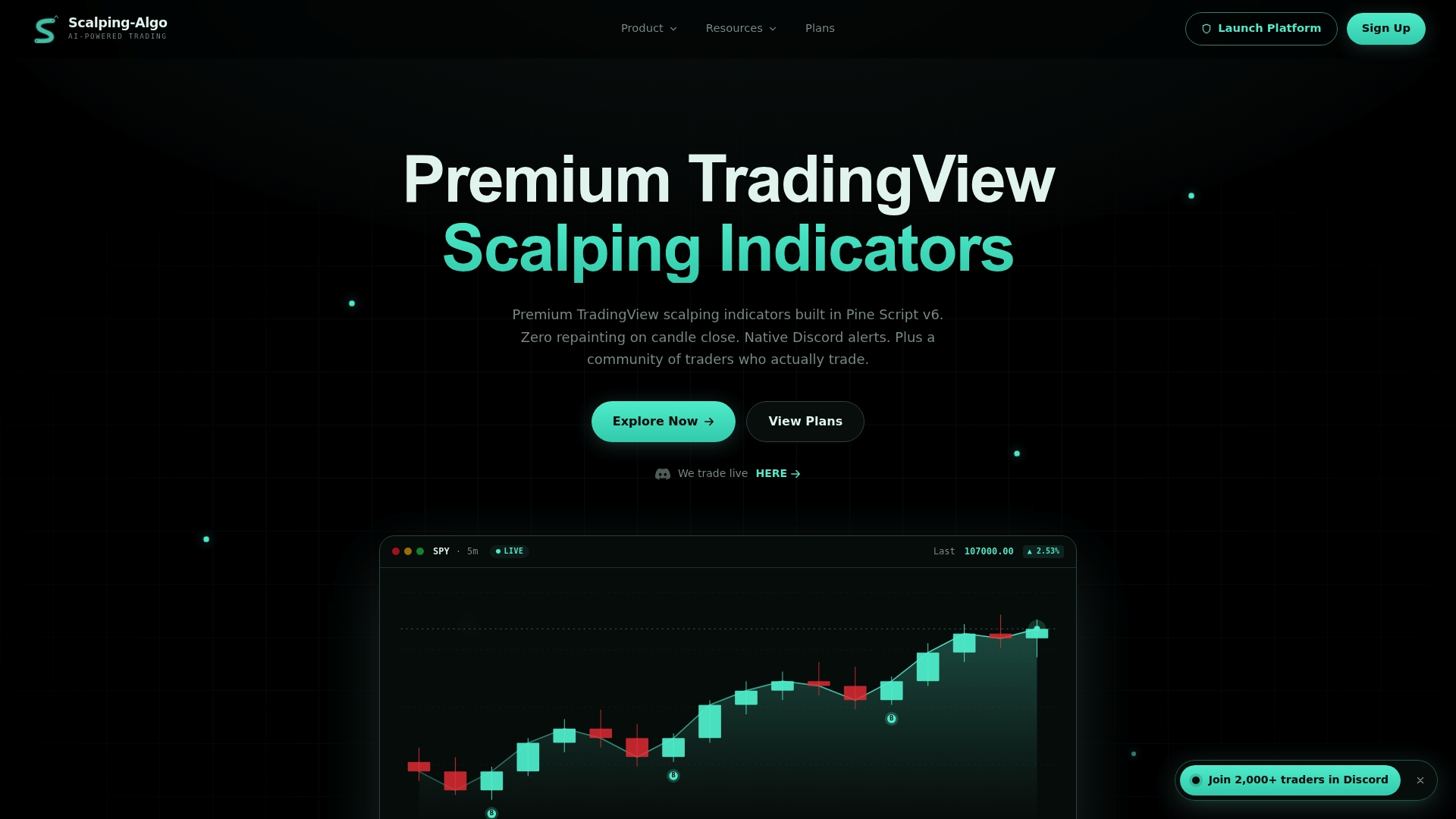
For traders who want both precision and transparency, Scalping-algo offers a Command Center dashboard that consolidates alerts, backtesting, and live mentorship. Visit Scalping-algo now to evaluate how its automated webhook alerts and open-source indicators can sharpen your execution and support your scalping strategy.
FAQ
How does Scalping-algo help with fast execution in trading?
Scalping-algo provides real-time, non-repainting buy and sell signals optimized for 1m–15m timeframes. Its native Discord webhook alerts allow traders to automate execution quickly, making it a practical choice for fast-paced scalping. Traders can expect clear signal delivery and the ability to capitalize on short-term market movements efficiently.
What is the difference between Scalping-algo and LuxAlgo?
LuxAlgo excels in AI-powered strategy creation, helping traders build and refine their own indicators and strategies easily. Scalping-algo, on the other hand, focuses on providing non-repainting signals that are ready for immediate execution, making it more suitable for traders looking for straightforward, immediate setups.
Which platform offers integrated mentorship alongside trading signals?
Scalping-algo includes a Command Center that consolidates alerts, backtesting, and live mentorship, making it an excellent choice for traders new to live execution. This feature enables users to learn in real-time while engaging with the system, enhancing their trading skills as they implement the signals.
Can I automate my trades using Scalping-algo?
Yes, Scalping-algo integrates with native Discord webhook alerts to automate trade executions. Traders can set up alerts that trigger automatic trade placements, allowing for a more hands-off approach during market hours.
What type of traders would benefit most from using Scalping-algo?
Traders focused on short-term scalping and faster swing setups will benefit significantly from Scalping-algo’s features. Its emphasis on clear signals and fast execution makes it ideal for those working with crypto, forex, indices, commodities, and stocks.