
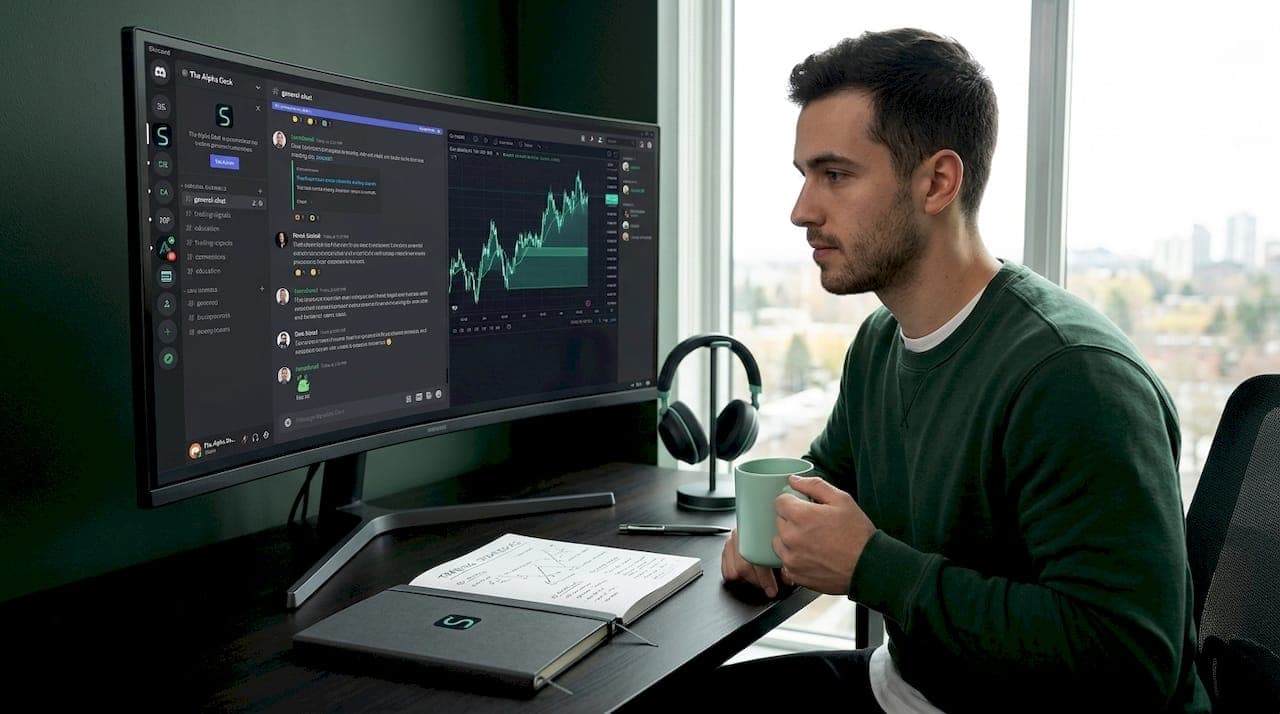
Retail traders used to learn in isolation. You bought a book, watched YouTube videos, and hoped for the best. That model is fading fast. The role of Discord in trading education has grown to the point where 47% of retail traders under 40 now cite online communities as their primary source for trade ideas. Discord did not just borrow space from gaming culture. It built something retail traders genuinely needed: a structured, real-time environment where mentorship, chart discussion, and market prep all happen in one place.
Table of Contents
- Key takeaways
- The role of Discord in trading education and why it stands out
- How Discord accelerates real-time learning and mentorship
- Assessing quality and avoiding pitfalls in trading Discords
- Practical steps for integrating Discord into your routine
- My honest take on Discord and trader development
- Take your Discord education further with Scalping-Algo
- FAQ
Key takeaways
| Point | Details |
|---|---|
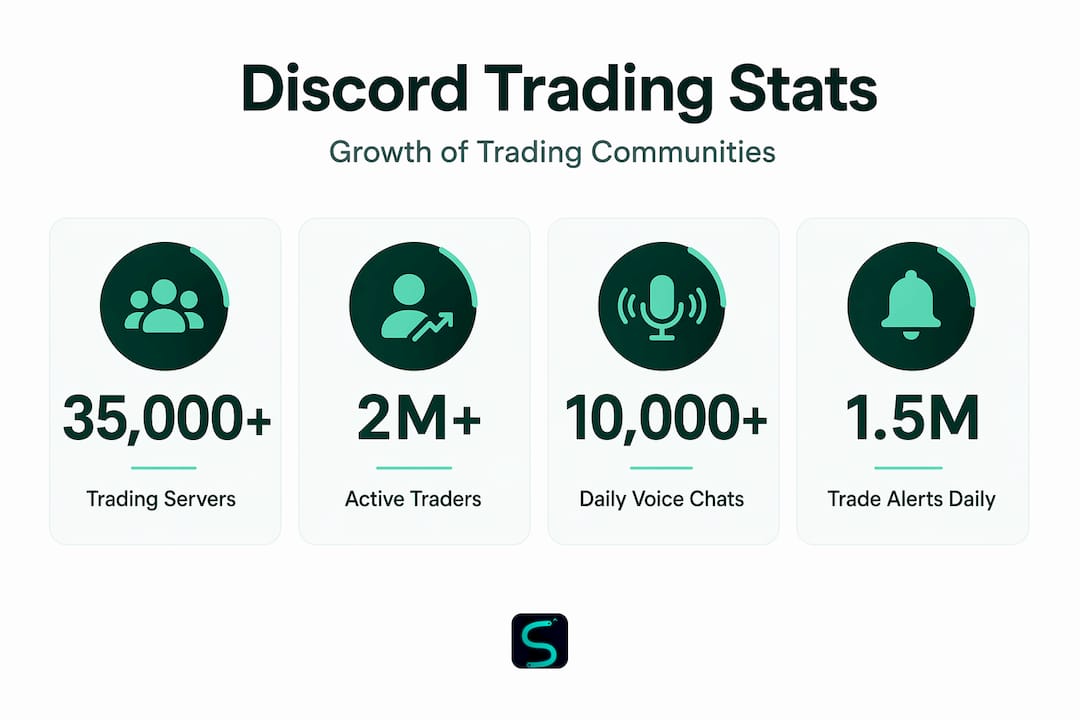
| Discord dominates trading education | Over 35,000 servers are dedicated to trading, giving retail traders access to structured, community-driven learning. |
| Education beats alerts | Communities focused on process and methodology produce better traders than servers that only push buy/sell signals. |
| Quality over size | Smaller, focused Discord groups around specific strategies often outperform large, alert-driven servers for learning depth. |
| Observation before action | Spending 30 to 60 days learning in a server before trading on its input significantly improves outcomes. |
| Vet every community | Strong moderation, clear rules, and transparent track records separate legitimate educational servers from scams. |
The role of Discord in trading education and why it stands out
Discord did not become the top platform for trading communities by accident. It won because of how it is built. The combination of organized channels, role-based permissions, and bot integrations creates an environment that other chat platforms simply cannot replicate at the same depth.
Compare that to Telegram, which pushes information in a single scrolling feed with no real structure. Reddit offers threads and upvotes but lacks real-time interaction. Slack is organized but expensive and geared toward corporate teams. Discord sits in the middle of all of them: free to use, deeply organized, and built for live conversation.
| Platform | Strengths | Weaknesses |
|---|---|---|
| Discord | Multi-channel structure, bots, roles, live voice and video | No native trading tools, moderation varies |
| Telegram | Fast broadcast messaging, large reach | Single-feed chaos, hard to organize by topic |
| Community voting, deep archives | Slow, no real-time interaction | |
| Slack | Clean interface, integrations | Expensive for large groups, limits history |
Discord's organized channels and bots let server owners create dedicated spaces for pre-market prep, trade reviews, education resources, and live Q&A simultaneously. A new trader can jump into a "beginner concepts" channel without getting overwhelmed by the advanced trade-flow discussion happening elsewhere. That separation matters. It is what makes structured learning possible at scale.

As of early 2026, Discord hosts 35,000+ servers dedicated to stock and options trading alone, with some communities exceeding 500,000 members. That scale tells you something real about where retail trading education is moving.
How Discord accelerates real-time learning and mentorship
The best trading education is not passive. Reading a textbook on candlestick patterns is one thing. Watching a mentor mark up a live chart while the market is open is something else entirely. Discord makes the second scenario available to retail traders who could never afford a one-on-one coach.
Here is what separates the best educational Discord servers from the rest:
- Structured curricula. Top servers organize learning by topic and skill level, not just by date. Members progress through concepts systematically.
- Live streams and voice sessions. Mentors walk through setups in real time, so members see the decision process, not just the outcome.
- Chart comparison in real time. Discord aids learning of frameworks like Smart Money Concepts by letting members post charts side by side and get instant feedback from more experienced traders.
- Paper trading challenges. Top servers feature structured curricula and paper trading challenges that build skills without risking real capital.
- Bot-assisted engagement. Some communities use Discord bots to gamify learning with quizzes and chart challenges, which keeps members engaged far longer than passive reading.
The mentorship model on Discord works because feedback is immediate. You post a trade idea, and within minutes you get responses from traders who have been through the same setup. That feedback loop is what shortens the learning curve. The right trading community can accelerate a trader's learning curve by months or years, but the wrong one accelerates losses just as fast.
Pro Tip: Commit to a 30 to 60 day observation period before trading based on anything you see in a Discord community. Watch how the mentor calls setups, track their accuracy, and study their reasoning before your money is on the line.
Alert fatigue is a real risk in any active trading server. When signals come in constantly, traders start reacting instead of thinking. The most effective educational communities train members to build a personal watchlist and do pre-market prep, rather than chasing every call that hits the feed.
Assessing quality and avoiding pitfalls in trading Discords
Not every Discord trading server deserves your time. Some are genuinely educational. Others are pump-and-dump operations dressed up with professional branding. Knowing the difference before you join protects your capital and your time.
Signs of a high-value educational community:
- Mentors explain the why behind every trade, not just the entry and exit
- The server has organized channels for education, watchlists, trade reviews, and risk management separately
- Members are encouraged to question setups and share their own analysis
- The community has clear rules and active moderation
- Track records are transparent, with both wins and losses shown
Red flags to watch for:
- Constant "guaranteed returns" or "never lose" language
- No explanation of setups, just signals with entry and target prices
- Pressure to pay for premium tiers immediately
- Admins who dismiss critical questions or ban members who ask for proof
Discord's lack of built-in transaction security means the platform itself cannot protect you from bad actors. Reputation systems and strong moderation are the only real safeguards. Before joining any paid community, search the server name and its admin handles in trading forums to check for complaints.
Community moderation and clear organizational roles are what maintain a disciplined trading culture and prevent groupthink from taking over. A well-moderated server will shut down reckless FOMO trades just as quickly as it celebrates good ones.
Pro Tip: When you first join any Discord trading server, spend your first two weeks in paper trading mode. Apply the community's concepts to simulated trades so you can evaluate their actual edge before real money is involved.
Smaller focused servers often outperform larger ones for education. Smaller Discord groups around specific trading frameworks frequently provide better depth and accountability than massive servers where your questions get buried in thousands of messages per day.
Practical steps for integrating Discord into your routine
Using Discord for trading education works best when you treat it as a structured learning commitment, not a place to copy trades. Here is a practical sequence to follow:
- Start with free educational servers. Look for communities focused on foundational concepts like price action, volume analysis, or options basics. Free servers let you evaluate teaching quality before spending money.
- Observe for 30 to 60 days. Track how educators call setups in real time. Note accuracy, explanation quality, and whether members are learning or just following signals blindly.
- Upgrade to paid mentorship selectively. Paid trading Discord memberships typically cost around $100 per month and include live education, watchlists, and mentor callouts. Only pay when the free tier has already proven the quality of teaching.
- Use bots and pinned resources actively. Most organized servers pin educational guides, glossaries, and video libraries. Work through those systematically instead of just watching the live chat.
- Set a daily time limit for Discord. Active trading servers move fast. Spending three hours scrolling chat is not education. Cap your Discord time, do your own pre-market analysis, and use the community to validate or challenge your thinking.
- Prioritize process over alerts. Educational communities that emphasize process over alerts produce traders who can perform independently. If a server only works when you are watching it, you have not learned anything.
You can also learn more about why trading communities boost your edge beyond just idea generation. Discord combined with good tools creates a feedback-rich environment that textbooks cannot replicate.
My honest take on Discord and trader development
I have watched hundreds of traders go through Discord communities, both good and bad ones. My view is direct: Discord has genuinely changed the speed at which a retail trader can develop real skill, but most traders misuse it completely.
The problem is not the platform. The problem is that traders treat Discord like a signal subscription. They join a server, copy the first trade they see, lose money, and blame the community. That is not how learning works. The traders I have seen make real progress are the ones who show up every day, ask questions, and spend more time studying past trade reviews than reacting to live alerts.
I have also seen the uncomfortable side. Some communities use the language of education to sell a lifestyle, not a skill. Mentors post cars and profits but never show drawdown. The "trust me bro" culture is real, and it costs retail traders real money. My take: if a server cannot show you a losing trade and explain what went wrong, it is not teaching you anything worth knowing.
What actually works is combining Discord's collaborative environment with a disciplined personal system. Use the community to pressure-test your own ideas. Study the methodology, not just the calls. And always keep a trade journal separate from anything Discord produces so you can measure your own learning independently.
— Tran
Take your Discord education further with Scalping-Algo
Discord gives you the community and the mentorship. What it does not give you is the technical execution layer. That is where Scalping-Algo comes in. The platform's premium scalping indicators are built specifically for traders who have already started learning setups through communities and want real-time, non-repainting signals to confirm their reads on lower timeframes. If you want to go deeper, the Algo Master system walks you through a full three-indicator suite designed for disciplined execution, with native Discord webhook alerts built in. You learn the concepts in your trading community. You apply them with tools that are actually built for precision. That combination is where real progress happens.
FAQ
What is the role of Discord in trading education?
Discord serves as a real-time, structured platform where retail traders access mentorship, live chart discussions, and organized educational content across dedicated channels and servers.
How many Discord servers are dedicated to trading?
As of early 2026, Discord hosts over 35,000 servers focused on stock, options, and crypto trading, with some communities surpassing 500,000 members.
Are paid Discord trading communities worth the cost?
Paid communities typically charge around $100 per month and are worth it only when the free tier has already demonstrated consistent, explanation-driven teaching rather than pure signal delivery.
How do I avoid scams in Discord trading groups?
Look for communities that show losing trades with explanations, have active moderation, and do not pressure you into paid upgrades immediately. Avoid any server promising guaranteed returns.
How long should I observe a Discord trading community before acting on its signals?
A 30 to 60 day observation period is the recommended best practice, giving you enough time to evaluate setup accuracy and teaching quality before committing real capital based on community input.