
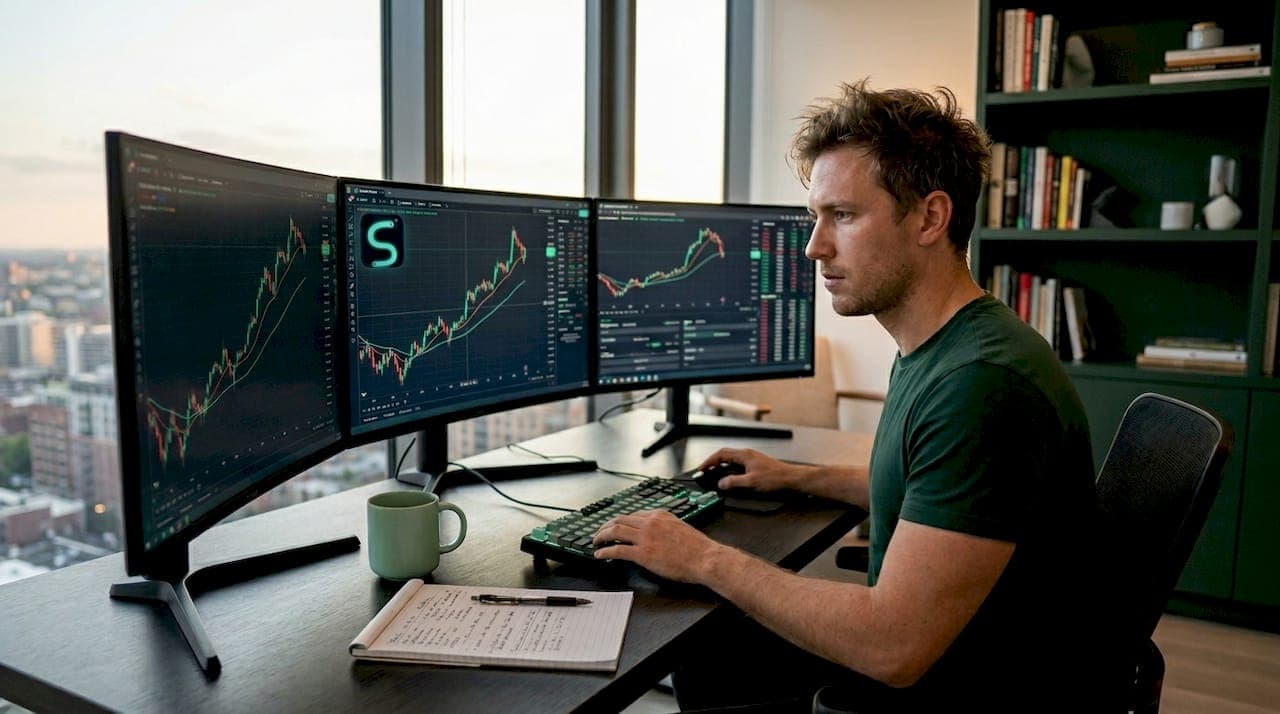
Scalping gets dismissed as "too risky" or "not worth the effort" by traders who have never done it properly. If you are asking why choose scalping in 2026, the honest answer is that it is not for everyone. But for traders who understand execution quality, cost structure, and rule-based discipline, scalping offers something most other strategies cannot: frequent, repeatable opportunities that do not depend on overnight risk or macro predictions. This guide cuts through the noise and gives you a realistic look at what scalping demands, what it delivers, and how to decide if it fits your trading style.
Table of Contents
- Key Takeaways
- Why scalping still works in 2026
- Cost efficiency and execution quality
- Discipline and risk rules that protect your edge
- Choosing markets, brokers, and tools
- Common pitfalls and when scalping is not right for you
- My take on scalping in 2026
- How Scalping-algo supports your 2026 strategy
- FAQ
Key Takeaways
| Point | Details |
|---|---|
| Scalping is a high-frequency style | Trades last seconds to minutes, requiring fast execution and strict rules to stay profitable. |
| Costs are the biggest threat | Commissions, spreads, and slippage can consume 30 to 50% of profit targets if you ignore them. |
| Discipline beats prediction | Daily loss limits and predefined setups matter more than being right on every trade. |
| Broker and tech choices matter | Raw spreads, ECN execution, and low latency are non-negotiable for viable retail scalping. |
| Know when to walk away | Scalping during low-liquidity windows or news events destroys edge faster than bad setups. |
Why scalping still works in 2026
Scalping, at its core, means opening and closing trades within seconds to minutes, often executing hundreds of trades per day. You are not trying to catch a big move. You are targeting small, repeatable price displacements across liquid markets and stacking those small gains consistently.
What separates scalping from day trading or swing trading is the holding period and the mindset. A swing trader can hold a position for days and tolerate drawdowns. A scalper cannot. Every trade is judged on its own merits, filled and closed before the market can shift against you in any meaningful way.
Markets suited to scalping share a few common traits:
- High liquidity. Tight spreads and fast fills. Major forex pairs like EUR/USD, futures contracts like ES or NQ, and large-cap crypto pairs all qualify.
- Consistent intraday volatility. You need price to move enough to generate profit after costs. Flat, directionless sessions kill scalping edge.
- Transparent execution. ECN or STP broker models where you see real market depth, not a dealing desk quoting you a manufactured price.
Scalping also works across asset classes in 2026. Forex, futures, and crypto all offer viable scalping opportunities for retail traders who pick the right sessions.
Pro Tip: Stick to one or two markets when starting out. Mastering EUR/USD or ES futures before adding crypto or commodities prevents overextension and keeps your execution tight.
Cost efficiency and execution quality
Here is where most retail scalpers lose money before they ever place a bad trade. The costs in scalping are not a footnote. They are the central challenge.
Every time you open and close a position, you pay the spread, commissions, and whatever slippage the market gives you. Transaction costs can consume 30 to 50% of your intended profit target per trade. Multiply that across hundreds of trades and you see the problem immediately.
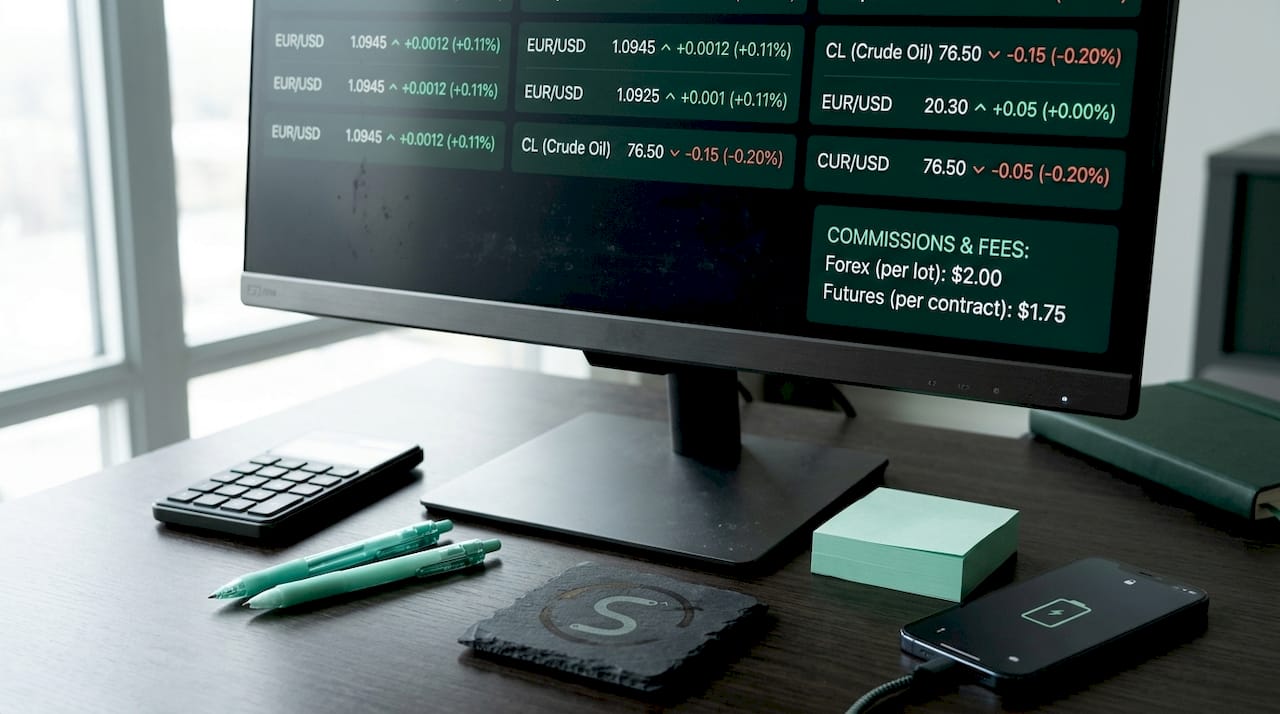
| Cost Type | What It Eats | How to Minimize |
|---|---|---|
| Commission | Fixed per trade or per lot | Use low-commission ECN broker |
| Spread | Built into entry/exit price | Trade during peak liquidity hours |
| Slippage | Variable, depends on execution | Use limit orders, avoid news events |
| Swap/Rollover | Overnight or intraday holds near rollover | Avoid holding positions near rollover times |
Slippage deserves special attention. Slippage is caused by latency, liquidity gaps, broker routing, and market movement between order submission and fill. You cannot eliminate it, but you can reduce it. Choosing a broker with raw spreads and direct market access matters more than finding a "special strategy" to overcome execution variance.
Many traders underestimate their total costs by 50 to 70% because they only check commission on the broker statement and ignore spread and slippage. Export your trade history and calculate everything together. The real number will surprise you.
On the technology side, latency below roughly 20ms is a practical threshold for retail scalping. After that point, further speed improvements matter far less than reducing your total cost per trade. A VPS server co-located near your broker's execution servers helps, but it is not a substitute for a good broker.
Pro Tip: Track commission, spread, and swap fees together in a spreadsheet. If your cost-per-trade ratio exceeds 30% of your average winner, your setup needs re-evaluation before your strategy does.
Discipline and risk rules that protect your edge
No scalping discussion is complete without covering the rules that keep you in the game. The benefits of scalping in 2026 are only accessible to traders who operate with a structured process. Here is what that looks like in practice:
- Set a daily loss limit and honor it. Define the maximum you will lose in a session before you log off. When you hit it, you stop. No exceptions.
- Cap your daily trade count. Overtrading is the silent killer in scalping. Limiting yourself to a set number of trades forces selectivity.
- Only take predefined setups. Entries based on impulse or "gut feel" do not belong in scalping. Know exactly what your setup looks like before the session opens.
- Avoid trading during major news releases. Economic data announcements create sudden, unpredictable volatility where spreads widen dramatically and fills become unreliable.
- Step away after a losing streak. NinjaTrader's 10 Key Rules specifically recommend stepping away after consecutive losses to reset mentally and avoid revenge trading.
- Review your sessions consistently. Post-session reviews help you separate emotional decisions from structured trades. Over time, this review habit is what separates improving scalpers from those who stay stuck.
The discipline side of scalping trading tips in 2026 is not glamorous, but it is where the real edge lives. A trader with an average setup and elite discipline will outperform a trader with a great setup and poor discipline every time.
You can build out a formal risk management workflow around these rules to make them consistent across every trading session.
Choosing markets, brokers, and tools
Getting your infrastructure right is as important as your strategy. Here are the key elements worth evaluating:
Market selection. Futures contracts (ES, NQ, CL) and major forex pairs lead the pack for scalping suitability. Both offer deep liquidity, tight spreads during peak hours, and transparent pricing. High-liquidity crypto markets like BTC/USD or ETH/USD are viable with the right broker, though spreads vary more and require extra attention to slippage and execution.
Broker requirements. Not all brokers support scalping. You want:
- Raw spread accounts with ECN or STP execution
- No dealing desk intervention on fills
- Clear commission structure per lot or per contract
- Low-latency tech stack and fast order routing infrastructure
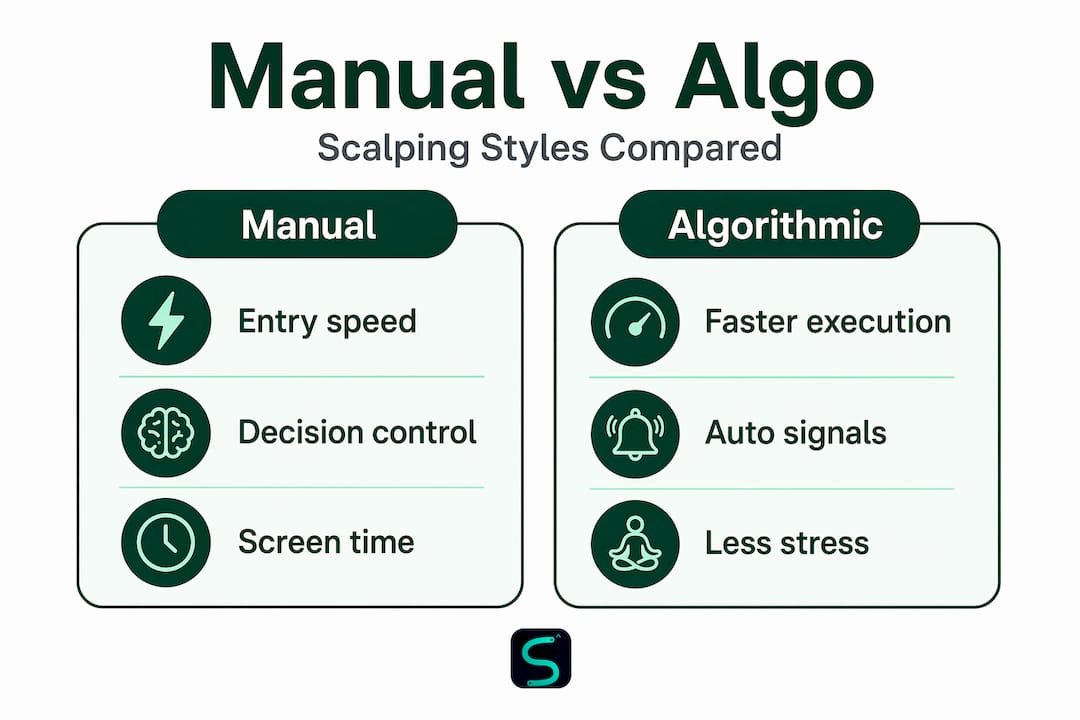
Technology tools. Direct market access, a reliable VPS, and indicator-based signal generation all reduce the mental load during fast markets. Automated trading bots built on pre-set algorithms can execute faster than any manual trader and remove emotional hesitation from entries. This is where algorithmic tools like those built by Scalping-algo become genuinely useful.
| Feature | Manual Scalping | Algorithmic Scalping |
|---|---|---|
| Entry speed | Human-limited | Sub-second execution |
| Emotional bias | Present | Removed |
| Backtesting | Limited | Full historical analysis |
| Setup consistency | Variable | Repeatable every session |
Exploring algorithmic scalping methods gives you a practical look at how automation improves speed and consistency across crypto and forex.
Common pitfalls and when scalping is not right for you
The scalping advantages in 2026 are real, but they only apply to traders who enter this style with eyes open. Here is where most people get it wrong:
- Ignoring hidden costs. Commissions and spreads look manageable until you account for slippage and swap fees. The full picture is often 2x what traders expect.
- Expecting fast profits without skill. Most retail scalpers are unprofitable due to underestimating cost impact, lacking emotional control, or trading without enough capital to absorb variance.
- Trading during the wrong hours. Low-liquidity sessions, rollover windows, and high-impact news events are traps. Spreads spike. Fills degrade. Edge disappears.
- Underestimating mental demands. Scalping requires sustained focus across many rapid decisions per session. It is mentally exhausting in a way that swing trading is not.
- Starting undercapitalized. Thin capital means each losing streak hits harder and forces suboptimal position sizing that compounds the problem.
Pro Tip: If you find yourself checking your P&L after every trade and adjusting your next entry based on how the last one felt, that is a sign to pause. Emotional feedback loops destroy scalping discipline faster than a bad strategy.
Scalping is also not the right style if you have limited time to monitor screens, poor internet reliability, or no interest in reviewing performance data. The traders who succeed here treat it like a business with measurable metrics.
My take on scalping in 2026
I have watched a lot of traders approach scalping the wrong way. They build a decent setup, backtest it, and then blow their account in live trading. The reason is almost never the strategy. It is execution quality combined with unrealistic cost assumptions.
In my experience, the traders who make scalping work long-term stop trying to predict the market and start treating their process as the product. That means knowing your exact cost-per-trade, respecting your loss limit every single session, and reviewing your fills after each day. Not exciting. Extremely effective.
One misconception I keep seeing is the belief that scalping is somehow more forgiving than other styles because each trade is small. The opposite is true. The speed and volume of scalping amplify every mistake in your process. One bad habit in a swing trading setup might cost you a few trades. The same habit in scalping costs you hundreds.
The scalping advantages in 2026 are real for traders who are disciplined and realistic. Precision entry methods matter. Understanding volatility matters. But none of that works without a repeatable, rule-based process running underneath everything. That is where most people underinvest.
— Tran
How Scalping-algo supports your 2026 strategy
Scalping-algo builds premium TradingView indicators in Pine Script v6, purpose-built for traders who scalp crypto, forex, futures, and commodities on 1m to 15m timeframes. The signals are real-time and non-repainting, which means what you see in live markets is what you get.
The platform's Smart Scalping Signals indicator delivers precise buy and sell entries with built-in volatility gating and divergence detection, cutting down noise and keeping you focused on high-probability setups. The Algo Master suite adds backtesting, alerts, and a full Command Center for managing your scalping sessions from one place. All scripts are open-source, and the Discord community runs live sessions for both new and experienced traders. If you are serious about building an edge in 2026, explore Scalping-algo's tools and see what institutional-grade execution looks like for retail traders.
FAQ
What is scalping in trading?
Scalping is a short-term trading style where positions are opened and closed within seconds to minutes. Traders target small, repeated price moves across high-liquidity markets like forex, futures, and crypto.
Is scalping profitable in 2026?
Scalping can be profitable, but most retail scalpers lose money due to underestimating transaction costs, lacking emotional discipline, or trading in poor market conditions. Success requires tight cost management and rule-based execution.
What markets are best for scalping?
Major forex pairs like EUR/USD, futures contracts like ES and NQ, and high-liquidity crypto pairs are the top choices. They offer tight spreads, deep liquidity, and reliable fills during peak trading hours.
How do I reduce slippage when scalping?
Use a broker with ECN or STP execution and raw spreads, trade during peak liquidity sessions, avoid major news events, and consider a VPS to reduce latency. Tracking slippage across your trade history helps identify patterns.
How many trades should a scalper take per day?
There is no universal number, but setting a daily trade cap is critical. Quality setups matter more than volume. Overtrading is one of the most common reasons scalpers underperform even when their strategy is sound.