
Before you fire off a 1 to 15 minute scalp, run this math: one trigger + one independent confirmation + multi-timeframe alignment + a volume/volatility gate + a defined stop and target. That's the whole game. Anything more slows you down. Anything less gets you faded.
Your 60-second pre-trade scan:
- Trigger: Price closes past a level (range high, VWAP, order block edge) on your execution frame.
- Independent confirmation: RSI, MACD, or Stochastic agrees with direction, not just the same signal repeated.
- Multi-timeframe check: The frame one level up doesn't contradict you.
- Volatility/volume gate: ATR is above your minimum and volume is expanding, not flat.
- Exit math: Stop and target are set in Pine Script v6 or on your TradingView chart before you click.
Skip the trade if the higher timeframe disagrees, volume is dead, or ATR sits below your floor. No exceptions.
Pro Tip: If you can't check all five boxes in under a minute, the setup isn't clean enough to scalp. Walk away and wait for the next one.
Key Takeaways
Reliable scalp entries come from combining one objective trigger with one independent confirmation, multi-timeframe alignment, and a volume or volatility gate before every trade.
| Point | Details |
|---|---|
| Keep confirmations independent | Pair a trigger with one confirmation from a different category, like volume or structure, not another momentum reading. |
| Respect the timeframe ladder | Confirm your execution frame against a timeframe at least one level higher to avoid trading against the trend. |
| Gate for volume and volatility | Require breakout volume well above average and ATR above your minimum threshold. |
| Backtest before going live | Test 100 to 200+ signals with an out-of-sample split before trusting any confirmation rule. |
| Use tested, non-repainting tools | Scalping-Algo's Pine Script v6 indicators and Command Center dashboard package this checklist into ready-to-use alerts and backtests. |
Table of Contents
- How to Build a Scalper's Confirmation Checklist and Run It Live
- Indicator-By-Indicator Confirmation Methods for Short Timeframes
- How Do You Backtest Signal Confirmation Methods Before Going Live?
- Execution and Alerting Workflows for Fast Scalps
- Quick TradingView Setup: Copy-Ready Settings by Asset Class
- Where to Get Audited, Non-Repainting TradingView Confirmation Tools
- Sources
How to Build a Scalper's Confirmation Checklist and Run It Live
Confirmation isn't a vibe check. It's a sequence, and skipping steps is where accounts bleed out. Run it in this order every time.
- Context. Check the higher timeframe. If you're executing on a 5-minute chart, glance at the 30 or 60 minute frame for the prevailing trend. Multi-timeframe confirmation works best when your confirmation frame sits at least one level above your entry frame, which keeps you from scalping against a freight train.
- Setup. Mark your level: a pivot, an order block, or a VWAP band. This is where price needs to react.
- Trigger. Define an objective, binary event. Something like "1-minute close above range high, then a retest that doesn't close back inside" removes guesswork entirely, a rule pulled straight from proven scalping entry timing frameworks.
- Confirmation. One independent signal, not three correlated ones. A structure break, a volume expansion, or a VWAP reclaim each count as separate evidence categories, following the confluence model of stacking independent witnesses rather than five flavors of momentum.
- Execute and manage. Set your stop and target before entry.
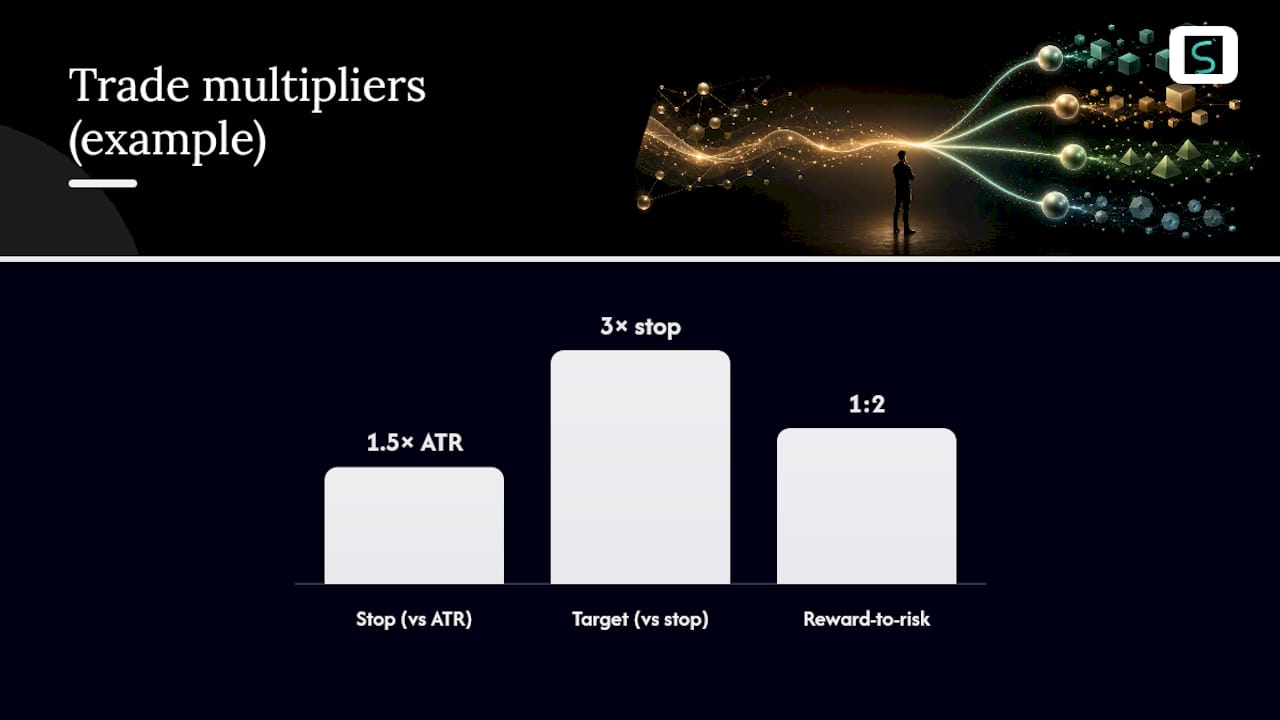
Worked example: Price breaks a 15-minute pivot high on strong volume. The 60-minute trend is bullish, so context checks out. Trigger fires on a 5-minute close above the pivot with a clean retest. RSI confirms momentum above 55, independent from the price trigger. Stop goes 1.5x ATR below entry; target sits at 3x that distance, giving roughly a 1:2 reward-to-risk. If ATR on the 5-minute is $0.40, risking 1% of a $10,000 account means position size equals ($100 risk) ÷ ($0.60 stop distance) = 166 units.
Pro Tip: Never confirm RSI with Stochastic and call it two signals. They're both momentum oscillators reading the same underlying price action. Pair momentum with something structural, like volume or VWAP.
Indicator-By-Indicator Confirmation Methods for Short Timeframes
Not every indicator earns a seat at the table for scalping. Some react fast; others lag so badly they confirm moves that already ended.
- EMA/SMA ribbons: Use a fast 5/8/13 setup on 1 to 5 minute charts. A 5-8-13 SMA ribbon flags waning momentum when price pierces the 13-period line. Don't rely on a 50/200 cross for scalps; that's swing-trade territory.
- VWAP: Low-lag and institutional-grade for intraday bias. Price above VWAP favors longs. Don't fade VWAP reclaims without a second confirmation.
- RSI: Set to 9 or 7 periods for faster reads on 1 to 5 minute charts. Don't treat 50-crosses alone as entries; use divergence or overbought/oversold extremes instead.
- MACD: Default 12/26/9 lags badly on scalps. Drop to 6/13/5 for faster response. Don't use it standalone; it's built to confirm, not trigger.
- Stochastic: Pair with Bollinger Bands to time exits, a combination that works because Stochastic plus a 13-bar, 3 standard deviation Bollinger Band flags exhaustion better than either alone.
- Bollinger Bands: Tighten to a 10 to 13 period setting for scalps. Don't buy every band touch; wait for a reaction.
- ATR: Your volatility gate. Don't trade below your minimum ATR threshold; there's not enough room to hit targets.
- SuperTrend: Good for quick trend bias on 5 to 15 minute charts. Don't use as sole confirmation; it repaints on some settings.
- RMI: A smoother momentum read than RSI. Useful as a tiebreaker, not a primary trigger.
- Pivot Points/Order Blocks: Strong for setup and location. Don't chase price mid-range; wait for the level.
- Volume/OBV: Confirms conviction behind breakouts. Don't ignore flat volume on a "breakout."
In Pine Script v6, build alerts around non-repainting conditions using confirmed bar closes, not intrabar values, so your signal history matches what you'd have actually traded.
How Do You Backtest Signal Confirmation Methods Before Going Live?
A confirmation rule that hasn't been tested is a guess with extra steps. Backtesting on TradingView tells you whether your rule actually filters noise or just feels smart in hindsight.
Run through this checklist first:
- Minimum 100 to 200 trade signals before drawing conclusions on an intraday scalp system. Tick count matters more than trade count when timeframes are this short.
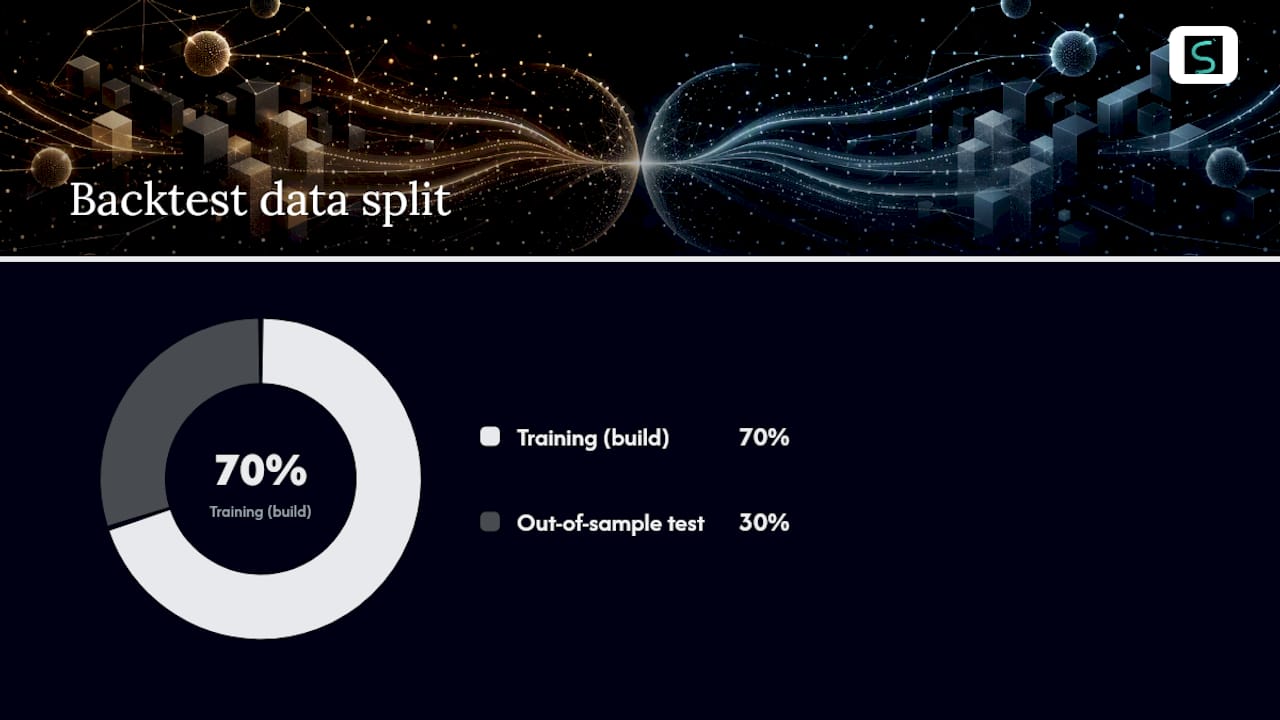
- Split your data: 70% for building the rule, 30% held out for out-of-sample testing.
- Check parameter stability. If your edge disappears when you shift ATR length from 14 to 12, it wasn't a real edge.
- Factor in slippage and fees. Scalp margins are thin; a 2-tick slippage assumption can flip a winning backtest negative.
- Walk-forward test using rolling windows, retraining periodically rather than curve-fitting one static window. This mirrors backtesting methodology best practices used across serious trading research.
- Confirm non-repainting behavior by checking that signals plotted on historical bars match what would have fired in real time, a design standard behind Scalping-Algo's Pine Script v6 indicators.
| Volume Condition | Threshold vs. Average | Reliability Tier |
|---|---|---|
| Standard breakout | significantly above average | Solid confirmation |
| Consolidation breakout | significantly higher than average | High confidence |
Those volume thresholds separate real breakouts from traps more consistently than price action alone.
Execution and Alerting Workflows for Fast Scalps
Confirmation means nothing if execution lags behind it. Your alert stack needs to fire the moment trigger and confirmation align, not thirty seconds later.
- Configure alerts with three conditions baked in: signal, confirmation, and timeframe, so TradingView only pings you on a complete setup.
- Use native webhook alerts to push signals straight to Discord or an execution bot, cutting out manual chart-watching entirely, similar to workflows covered in setting up trading alerts for scalping.
- Bracket orders (entry, stop, target) attached at trade placement handle partial fills automatically, which matters when scalping thin order books.
- Cap acceptable slippage at 1 to 2 ticks on liquid pairs; widen your stop distance instead of chasing fills on illiquid tickers.
- Reserve manual execution for lower-liquidity assets where webhook-triggered market orders risk bad fills.
Quick TradingView Setup: Copy-Ready Settings by Asset Class
Paste these in and adjust from there:
- EMA ribbon: 5/8/13 on 1 to 5 minute charts for trend lean.
- VWAP: Use as a bias filter; only take longs above, shorts below.
- RSI: 7 to 9 period, watch 30/70 extremes for reversals.
- ATR stop multiplier: 1.5x for entries, 3x for targets, adjusted by asset class below.
Crypto: Widen ATR multipliers (2x stop, 4x target) since volatility spikes hard around news. Watch exchange-specific liquidity gaps.
Forex: Watch spread cost relative to your target; a 5-pip scalp on a 2-pip spread eats a third of your edge before you're even right.
Equities: Favor limit orders in low-liquidity tickers; market orders on thin names can slip well past your intended entry.
Save your layout as a template once dialed in, then link your alerts directly to the trend confirmation indicator settings so every new chart inherits the same rules.
Disciplined Testing and Conservative Sizing for Scalpers
Over-confirm and you'll watch winners pass you by. Under-confirm and you'll get chopped up by noise. The fix is boring: one trigger, one independent confirmation, sized small enough that being wrong doesn't hurt.
Journal every trade against your backtest assumptions. If live results drift from backtested ones, the market changed or your rule was never as solid as it looked. Scalping rewards the traders who survive long enough to let a real edge compound, not the ones who found the cleverest setup once.
Where to Get Audited, Non-Repainting TradingView Confirmation Tools
Building and backtesting every confirmation layer yourself, EMA ribbons, VWAP rules, volume gates, ATR stops, takes real hours most scalpers don't have between sessions. Scalping-Algo hands you that work already done: non-repainting indicators built in Pine Script v6, tested against historical data, with entry, stop, and target logic baked in.
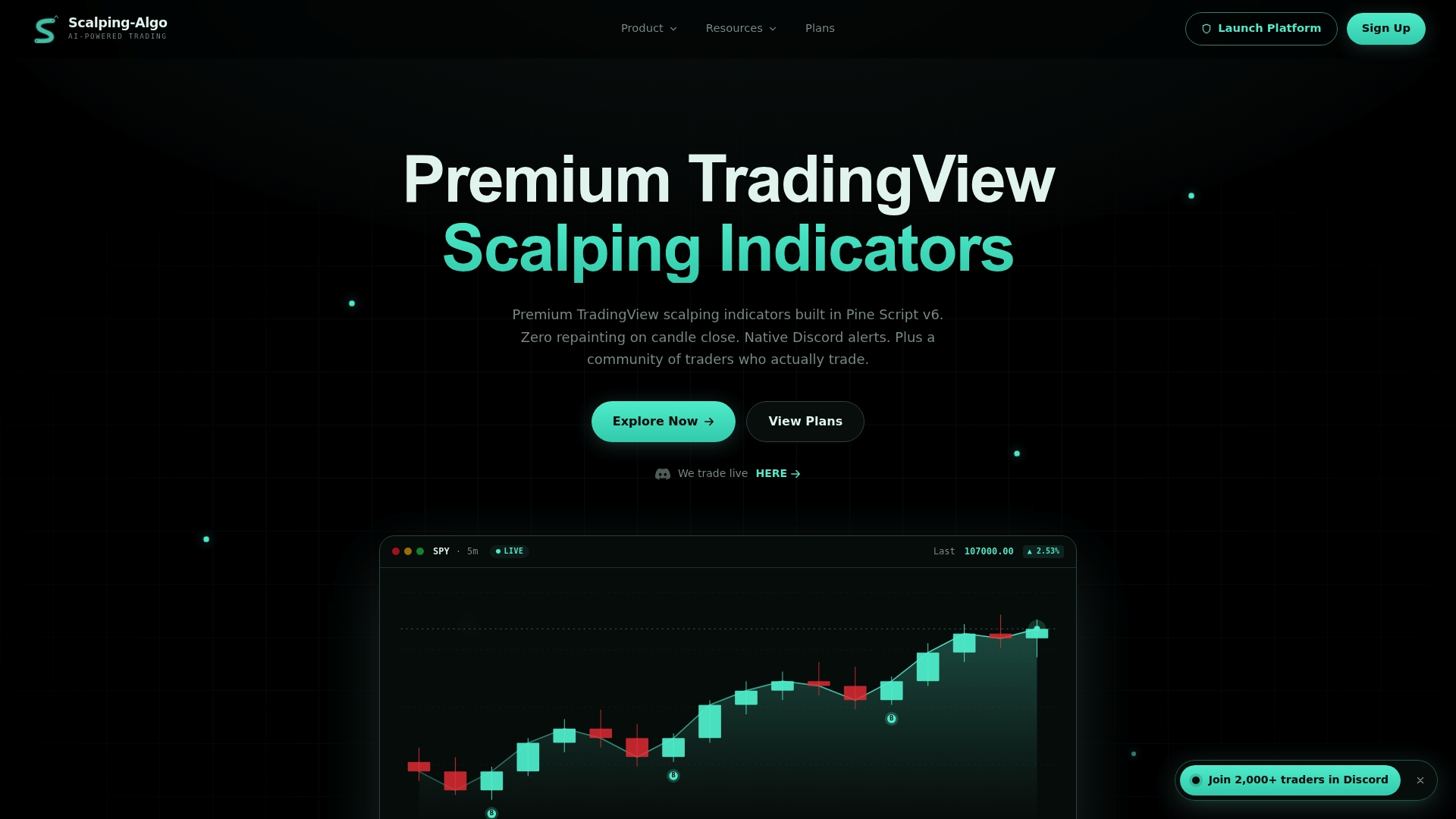
The Command Center dashboard ties it together: backtesting, live signals, and alerts in one place, with native webhook delivery straight to Discord so you're not manually watching five charts at once. Every script ships open-source, so you can verify the logic instead of trusting a black box. The Discord community adds live mentorship sessions if you want a second set of eyes on your confirmation rules. If you're ready to stop hand-building confirmation logic from scratch, check out the Scalping-Algo indicator suite and see the presets built for exactly the checklist covered above.
Sources
- Top Technical Indicators For Scalping A Trading Strategy
- Advanced Signal Confirmation Techniques: Master 2026 Trading – LedgerMind
- Scalping Entry Timing: Definitive Guide to Perfect Entries | TradeWinGuide
- Confluence in Trading: How to Stack Independent Signals the Right Way
What's the fastest way to confirm a scalp signal? One objective trigger plus one independent confirmation, like volume expansion or VWAP alignment, checked against a higher timeframe in under a minute.
How many indicators should I use to confirm a signal? Three to four from different categories (trend, momentum, volume, volatility) at most. More than that adds lag without adding real evidence.
Does multi-timeframe confirmation slow down scalping? No, it takes seconds if you preset your layout with the execution and confirmation timeframes side by side on TradingView.
This article is general information, not a substitute for advice from a qualified financial advisor. Consult a qualified financial professional about your own circumstances before acting on anything here.