

Open-source indicators are trading tools with publicly available, modifiable code that give traders full visibility into the logic driving every signal. The significance of open-source indicators goes well beyond free access. Transparency, customization, and community-driven development combine to give independent traders capabilities that were once reserved for institutional desks. Platforms like TradingView's Pine Script environment and GitHub repositories have made it possible for any analyst to audit, fork, and improve indicator logic without paying for a proprietary black box. That shift changes how traders build strategies, evaluate tools, and respond to market conditions.
What are the primary benefits of open-source indicators for traders and analysts?
Open-source indicators deliver four concrete advantages: transparency, flexibility, community-driven innovation, and cost efficiency. Each one directly affects how you build and trust your trading strategy.
Transparency is the most underrated benefit. Auditing indicator logic lets you verify the exact math behind every signal rather than trusting a vendor's marketing copy. When you can read the code, you can catch calculation errors, identify repainting behavior, and confirm that the indicator behaves the way its documentation claims.

Flexibility means you are not locked into a vendor's design choices. Open-source code lets you modify parameters, add filters, or combine multiple indicators into a single script. A scalper trading the 1-minute chart on crypto has different needs than a swing trader on daily equities. Open-source tools adapt to both.
The community dimension accelerates development in ways no single team can match. Open-source collaboration creates reusable building blocks for quantitative finance, which reduces redundant development across the industry. When one developer solves a problem, thousands of traders benefit from the fix.
Cost efficiency matters most for independent traders. Proprietary indicator suites often carry monthly subscription fees that eat into small account returns. Open-source alternatives on GitHub or TradingView's public library eliminate that overhead entirely.
- Audit every calculation before trusting a signal
- Modify parameters to fit your specific timeframe and asset class
- Contribute fixes and improvements back to the community
- Eliminate recurring subscription costs for core indicator logic
Pro Tip: Before using any open-source indicator in live trading, read the source code for repainting logic. Look for functions that reference future bars or use security() calls without the lookahead parameter set to false.
How do open-source indicators perform technically compared to proprietary tools?
Performance is where open-source indicators have made the most dramatic gains in recent years. High-performance libraries like indica compute multiple indicators at O(1) complexity, meaning calculation time does not grow as the dataset grows. That is a fundamentally different architecture from most interpreted scripting environments.
Compiled-core libraries written in Rust or C++ deliver real-time computations in as little as 6 milliseconds for complex indicator sets. That speed matters when you are scalping on a 1-minute chart and a delayed signal costs you entry price. Interpreted environments, including many proprietary platforms, cannot match that throughput under load.
| Metric | Open-source compiled (Rust/C++) | Interpreted scripting |
|---|---|---|
| Calculation speed | As low as 6ms per indicator set | Typically 50ms or more |
| Complexity scaling | O(1) with proper implementation | Often O(n) or worse |
| Customization | Full source access | Limited to exposed parameters |
| Cost | Free or community-priced | Subscription or license fee |
| Auditability | Complete | Partial or none |
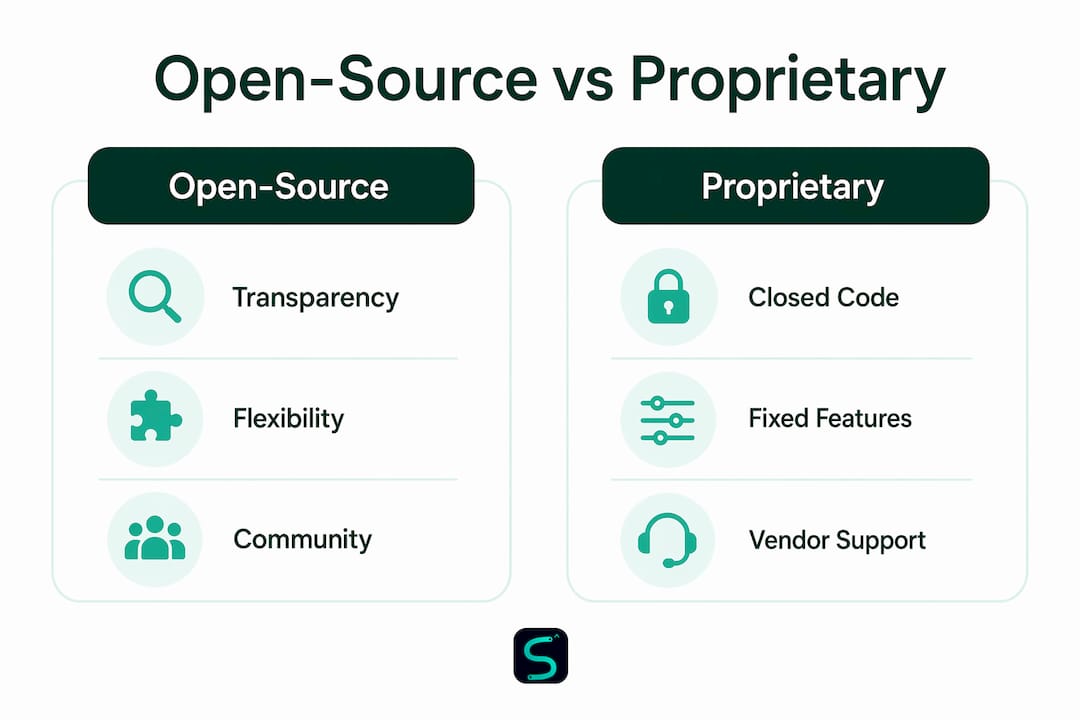
The practical implication is clear. Faster calculations mean your indicator updates before the next tick arrives, not after. For scalpers and high-frequency analysts, that difference is the gap between a good fill and a missed trade.
Pro Tip: When evaluating an open-source library for production use, benchmark it against your actual data volume. A library that performs at 6ms on 1,000 rows may behave differently on a live feed with 50,000 rows of tick data.
What are the key evaluation criteria for open-source indicator quality?
GitHub stars are a weak signal. A project with 10,000 stars but no commits in 18 months is a liability, not an asset. Active issue handling, community discussions, and maintainer responsiveness are stronger indicators of a project's real-world reliability.
The metrics that actually predict production viability fall into four categories:
CI health and commit history tell you whether the codebase is actively maintained. Broken CI or unpatched vulnerabilities signal production risk. A project where the test suite has been failing for three months is not ready for live trading.
Security posture matters more for trading tools than for most software categories. An indicator that connects to an exchange API or processes live price data needs regular dependency audits and fast vulnerability response.
Documentation quality separates tools built for production from weekend experiments. Clear parameter definitions, example outputs, and known limitations tell you the maintainer has thought through real-world use cases.
PR latency measures how quickly maintainers review and merge contributions. Long PR queues signal either an overwhelmed maintainer or a project in decline. Both outcomes hurt you if you depend on the tool for live signals.
The common mistake traders make is filtering by star count and download numbers. Those metrics reflect marketing reach, not code quality. A niche library with 200 stars, active weekly commits, and a responsive maintainer outperforms a popular but stagnant project every time.
How do modern open-source platforms integrate AI-readiness and advanced analytics?
The role of open-source metrics has shifted from simple visualization to machine-interpretable signal infrastructure. Agent-ready open data requires API-first design, searchable metadata, provenance tracking, and standardized formats. Without those features, AI systems default to proprietary datasets because they cannot reliably parse or trust the open alternative.
Multi-layered decision-making is the current standard for production-grade open-source signal platforms. Raw indicator values alone are not enough. The best platforms apply:
- Market quality gating: filters out signals during low-liquidity or high-spread conditions
- Multi-timeframe confluence: aligns signals across two or more timeframes before triggering an alert. Timeframe alignment can add a meaningful confidence boost to signal accuracy
- Volatility screening: uses ATR bandwidth to suppress signals during abnormal volatility spikes
- Divergence detection: identifies disagreement between price action and indicator momentum as a confirmation layer
API-first design is the feature that separates indicators built for 2026 from those built for 2016. When an indicator exposes its outputs through a structured API with machine-readable metadata, an AI agent can consume, evaluate, and act on signals without human intervention. Platforms that still output only chart overlays are not AI-ready, regardless of how sophisticated their calculations are.
The indicators for institutional traders standard now includes provenance data, meaning the indicator documents where its inputs came from and how they were processed. That audit trail is what makes automated systems trustworthy at scale.
What practical pitfalls should traders avoid when adopting open-source indicators?
Self-hosting an open-source trading platform introduces infrastructure problems that most traders underestimate. Persistence and concurrency controls are the most commonly overlooked requirements. When multiple processes write signal data simultaneously without proper file or database locking, you get write collisions that corrupt your signal log.
- Implement file or database locks before running any indicator in a multi-process environment. A single missed lock can produce duplicate or missing signals during high-volatility periods.
- Build synthetic fallback data streams. Deterministic OHLCV fallback streams keep your platform functional during exchange API outages or rate limit events. Without them, your indicator goes silent exactly when markets are most active.
- Audit commit history before deployment. A project with no commits in six months may have unresolved bugs that only surface under live market conditions.
- Test CI status on the day you deploy. CI health degrades over time as dependencies update. A green CI badge from three months ago does not guarantee a green build today.
- Document your modifications. When you fork and customize an open-source indicator, write down every change. Undocumented forks become unmaintainable within weeks.
The value of open-source tools comes with a maintenance responsibility. Traders who treat open-source as a set-and-forget solution eventually run into production failures that a proprietary vendor would have patched automatically. The tradeoff is real. The control you gain requires active stewardship.
Pro Tip: Schedule a monthly review of every open-source dependency in your trading stack. Check CI status, review recent commits, and scan for open security issues. Thirty minutes a month prevents hours of debugging during a live session.
Key Takeaways
Open-source indicators give traders full code transparency, faster computation, and community-driven reliability that proprietary tools cannot match without active evaluation and maintenance.
| Point | Details |
|---|---|
| Transparency builds trust | Auditing indicator code lets you verify signal logic and catch repainting before it costs you money. |
| Performance is measurable | Compiled open-source libraries compute indicator sets in as little as 6ms, outpacing most interpreted platforms. |
| Stars do not equal quality | Active CI health, commit frequency, and maintainer responsiveness predict reliability better than GitHub star counts. |
| AI-readiness requires structure | API-first design and machine-readable metadata are now required for indicators to work with autonomous trading systems. |
| Self-hosting demands discipline | Concurrency controls, fallback data streams, and monthly dependency audits prevent production failures. |
Why open-source transparency changed how I evaluate every indicator
Transparency in trading tools is not a philosophical preference. It is a practical filter. The first time I pulled the source code on a popular proprietary-style indicator and found it was simply a shifted moving average with a marketing name, my entire approach to tool evaluation changed.
Open-source forces honesty. When the code is public, the community finds problems fast. A repainting indicator on GitHub gets flagged in the issues tab within days. A proprietary tool with the same flaw can run for years without disclosure. That asymmetry is why I now treat open-source as the default starting point, not a budget alternative.
The AI-readiness shift is the development I watch most closely heading into 2026. Indicators that expose structured APIs and metadata are not just useful for automated systems. They are better designed tools overall. The discipline required to build machine-readable outputs forces developers to think clearly about what their indicator actually measures and why.
My advice for traders adopting open-source in 2026: start with open-source trading scripts to build your understanding of indicator logic, then layer in premium tools where you need production-grade reliability and support. The two approaches are not in conflict. They are complementary.
— Tran
Scalping-algo's premium tools built on open-source principles
Scalping-algo builds its entire indicator suite on the same transparency principles this article covers. Every script is written in Pine Script v6 and made available for inspection, so you always know what is generating your signal.
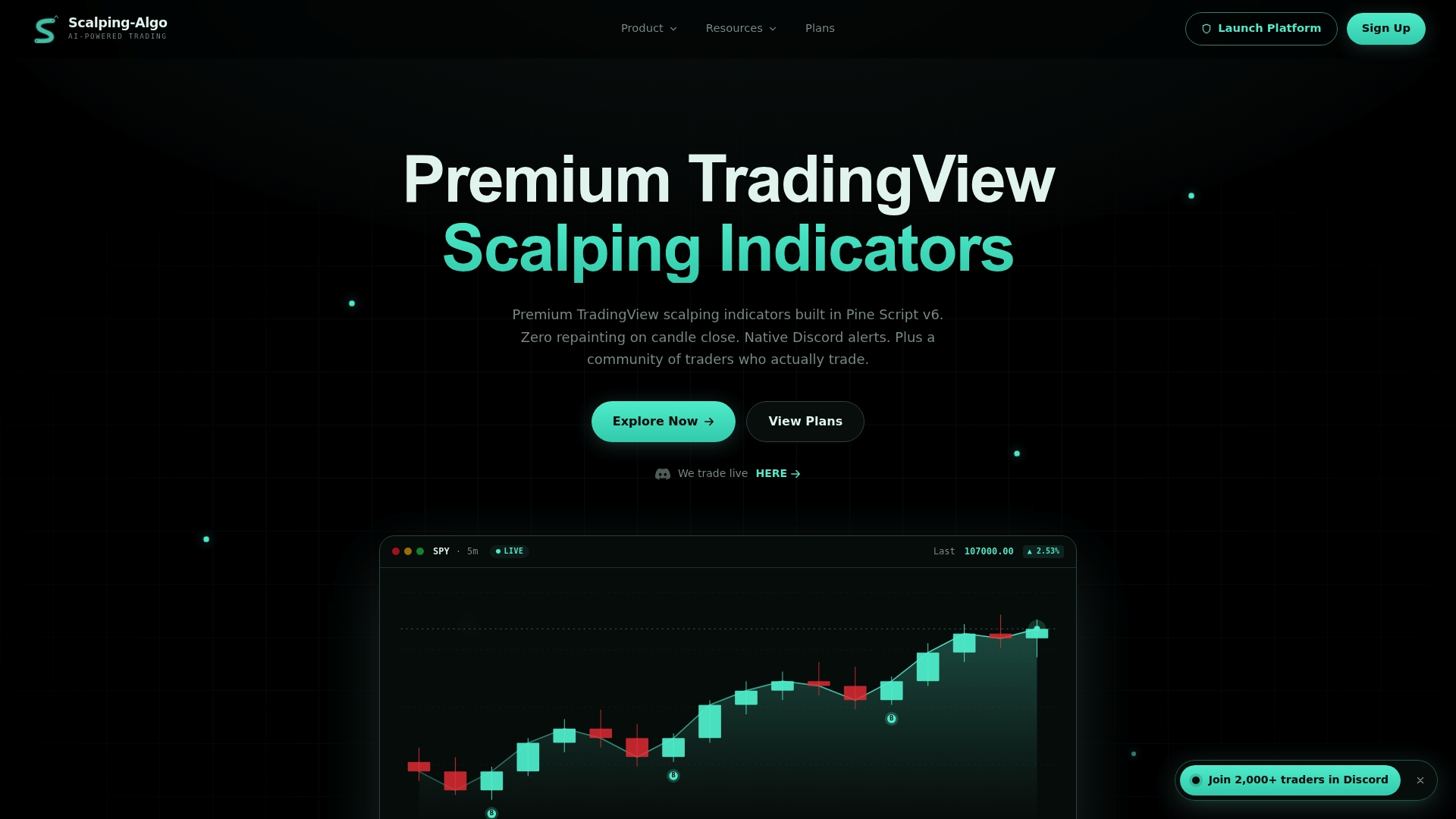
The Algo Master 3-indicator suite applies multi-timeframe confluence, volatility gating, and divergence detection in a single integrated system designed for 1m–15m scalping on crypto, forex, and futures. For traders who want the benefits of open-source design with the reliability of a maintained, production-tested platform, Scalping-algo's premium TradingView indicators deliver both. The Command Center dashboard adds backtesting, live alerts, and a Discord community for traders who want mentorship alongside their tools.
FAQ
What are open-source indicators in trading?
Open-source indicators are trading tools whose source code is publicly available, allowing traders to audit, modify, and redistribute the logic behind every signal. Platforms like TradingView's Pine Script and GitHub host thousands of these tools across all asset classes.
Why does transparency matter in trading indicators?
Transparency lets traders verify the exact calculations behind a signal rather than relying on a vendor's description. It eliminates black-box risk and supports learning by exposing the underlying math.
How do I evaluate whether an open-source indicator is reliable?
Check CI status, commit frequency, PR latency, and how quickly maintainers respond to reported issues. GitHub stars alone do not reflect production reliability.
Can open-source indicators work with AI trading systems?
Yes, but only when they are built with API-first design and machine-readable metadata. Without structured outputs and provenance data, AI agents favor proprietary datasets because they cannot reliably parse unstructured open alternatives.
What is the biggest risk when self-hosting open-source trading tools?
Concurrency failures from missing file or database locks are the most common production risk. Building synthetic fallback data streams protects your platform during exchange outages and API rate limit events.