

Open-source trading scripts are community-developed, freely accessible codebases that let retail traders automate, backtest, and deploy strategies without paying for expensive proprietary platforms. The importance of open-source trading scripts has grown sharply in 2026, driven by AI integration and a wave of institutional-grade repositories now available on GitHub. Projects like QuantDinger and OpenAlgo give individual traders access to the same infrastructure that hedge funds use, at zero licensing cost. AI models from providers like OpenAI, Anthropic, and Google have pushed these tools further, enabling natural language strategy configuration that requires no deep programming background.
What cost advantages do open-source trading scripts offer?
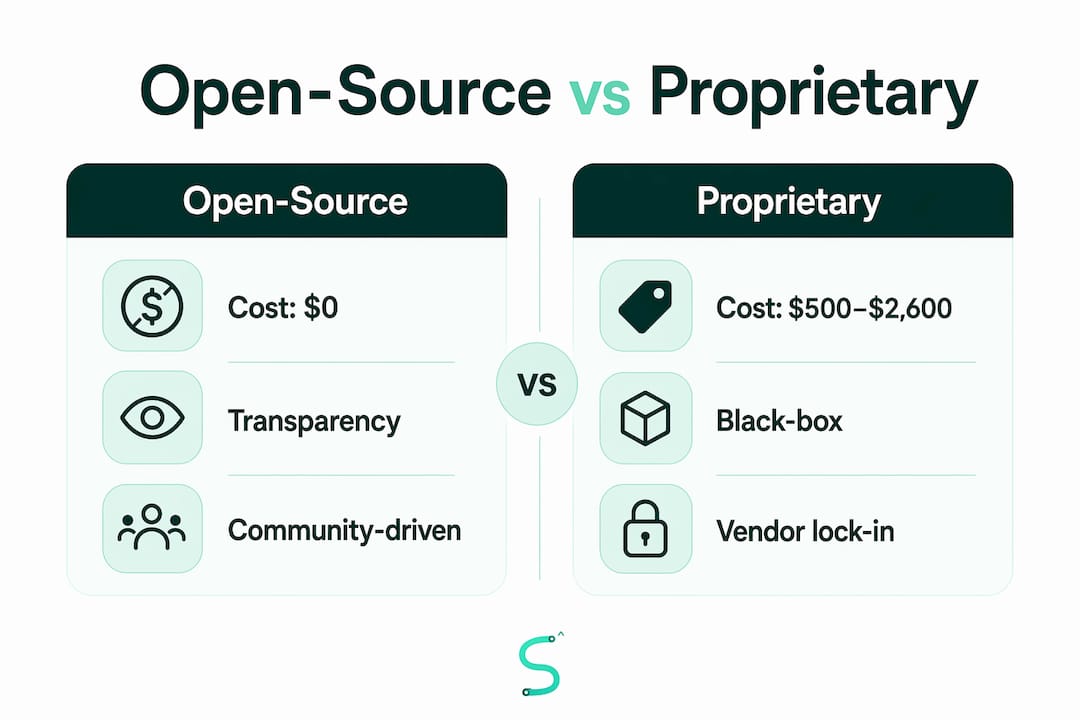
The financial case for open-source is direct. Retail traders can replace expensive proprietary stacks costing over $2,600 per month with free repositories that deliver institutional-grade infrastructure. That is not a marginal saving. It is the difference between a trading operation that bleeds overhead and one that allocates capital to actual positions.
Proprietary platforms like Bloomberg Terminal and FactSet lock users into recurring subscriptions, vendor-specific APIs, and upgrade cycles controlled entirely by the vendor. Open-source removes all three constraints. You run the code on your own machine, modify it freely, and pay nothing in licensing fees. The only real cost is your time.

Battle-tested components extracted from real-money trading systems, including data pipelines, risk management modules, and position tracking, are available as reusable modules. This cuts integration time significantly compared to building from scratch or paying a SaaS vendor to handle it.
| Factor | Open-source scripts | Proprietary platforms |
|---|---|---|
| Monthly cost | $0 licensing | $500–$2,600+ |
| Code access | Full source available | Black box |
| Customization | Unlimited | Vendor-limited |
| Vendor lock-in | None | High |
| Community support | Active GitHub communities | Paid support tiers |
Pro Tip: Before switching fully to open-source, calculate your actual time investment. A $200/month SaaS tool might cost less than 10 hours of setup time at your hourly rate. Open-source wins long-term, but factor in the onboarding curve honestly.
How do open-source scripts improve transparency and control?
Transparency is the most underrated benefit of open-source trading scripts. When you run a proprietary platform, you trust the vendor's execution logic completely. You cannot verify how orders are routed, how signals are generated, or whether the backtesting engine uses look-ahead bias. Open-source removes that blind trust entirely.
Self-hosted, Python-native architectures give traders full ownership of API keys, strategy code, and historical data. You audit every line of execution logic. You trace every order. This matters enormously for compliance, debugging, and strategy validation. At Scalping-algo, transparency in trading tools is treated as a non-negotiable feature, not a bonus.
Key transparency and control benefits include:
- Full auditability. Every function in your strategy is readable, testable, and modifiable.
- Data ownership. Your trade history, signals, and performance logs stay on your infrastructure.
- Security. Local storage of API keys in environment files prevents the data exfiltration risks common in cloud SaaS platforms.
- Compliance-ready audit trails. Logged execution workflows simplify regulatory review and post-trade analysis.
- No forced updates. You control when and whether to upgrade dependencies.
The security point deserves emphasis. Cloud SaaS platforms hold your API keys on their servers. A single breach at the vendor level exposes every connected account. Local-first architectures eliminate that attack surface entirely.
What role does AI play in open-source trading scripts in 2026?
AI has transformed what open-source trading scripts can do. Modern open-source harnesses now connect AI models from providers including OpenAI, Anthropic, and Google to over 50 exchanges and blockchains, automating complex workflows through natural language instructions. A trader can describe a position sizing rule in plain English and have the AI translate it into executable code.
AI acts as a universal translator making complex financial logic accessible to traders without deep programming skills. GPT-4o, Claude 3.5, and Gemini 1.5 Pro can generate Pine Script, Python, and MQL5 code from strategy descriptions, debug existing scripts, and suggest parameter optimizations based on backtest results.
| AI capability | Practical trading application |
|---|---|
| Code generation | Write strategy logic from plain English descriptions |
| Regime detection | Identify trending vs. ranging markets automatically |
| Parameter optimization | Tune stop-loss and take-profit levels via closed-loop testing |
| Natural language alerts | Configure webhook notifications without manual coding |
| Debugging assistance | Identify logic errors in backtesting and live execution |
The architecture that makes this work reliably is a two-layer system. Deterministic execution code handles real-time order placement with no AI latency. A separate AI reasoning layer handles strategy optimization, regime analysis, and parameter selection offline. This separation keeps live execution fast and predictable while still benefiting from AI decision support.
Pro Tip: Always review AI-generated trading code line by line before deploying it live. AI models hallucinate logic errors, especially around edge cases like partial fills, slippage handling, and exchange-specific API rate limits. Test on paper trading for at least two weeks first.
How can retail traders adopt open-source trading scripts effectively?
Getting started with open-source trading scripts does not require a computer science degree. The ecosystem has matured enough that a trader with basic Python knowledge can have a working backtesting environment running within a day.
Follow this adoption sequence:
- Start with GitHub. Search for repositories tagged with "algorithmic trading," "backtesting," or "Pine Script." Projects like QuantDinger offer Python-native, local-first architectures designed for retail traders.
- Learn Python basics. You do not need to master the language. Focus on reading existing code, modifying parameters, and running scripts in VS Code or JupyterLab.
- Backtest before deploying. Run every strategy on at least 12 months of historical data across multiple market conditions. Check for overfitting by testing on out-of-sample data.
- Separate your execution and AI layers. Keep real-time order execution in deterministic code. Use AI tools like GPT or Claude for strategy research and optimization only.
- Use paper trading for validation. Most exchanges offer sandbox environments. Run your script live but without real capital for two to four weeks before committing funds.
- Connect alerts via webhooks. Tools like Discord and Telegram integrate natively with most open-source frameworks, giving you real-time signal notifications without manual monitoring.
The benefits of algorithmic trading compound over time. Each iteration of your script produces data that informs the next version. Proprietary platforms rarely give you that feedback loop with full transparency.
How do open-source scripts perform in real trading scenarios?
Performance data on open-source frameworks is increasingly credible. Open-source frameworks derived from real-money systems have documented an 85.5% win rate across 400 or more live trades. That figure comes from a specific crypto trading framework, not a theoretical backtest. It reflects actual execution across live market conditions.
The flexibility of open-source scripts also produces a practical performance edge. When market conditions shift, a proprietary platform requires you to wait for a vendor update. An open-source script lets you modify the regime detection logic, adjust volatility filters, and redeploy within hours. That speed of iteration matters in crypto and forex markets where conditions change faster than quarterly software release cycles.
Key performance considerations when evaluating open-source scripts:
- Validate win rate claims independently. Reproduce the backtest on your own data before trusting published metrics.
- Check for survivorship bias. Many published results exclude losing strategy versions. Request full trade logs.
- Test across asset classes. A script optimized for Bitcoin futures may perform poorly on EUR/USD. Cross-asset testing reveals true robustness.
- Monitor slippage and execution quality. Open-source scripts give you full execution logs. Use them to measure real fill prices against signal prices.
For practical examples of how these scripts perform across crypto, futures, and forex, the futures trading strategies list at Scalping-algo covers documented real-world results in detail. Algorithmic trading in forex also provides useful context on automation performance in currency markets specifically.
Pro Tip: Never deploy a script live without a hard maximum drawdown limit coded directly into the execution logic. Automation can compound losses faster than manual trading. A 5% account drawdown trigger that halts the bot is not optional. It is the minimum viable safety layer.
Key takeaways
Open-source trading scripts give retail traders institutional-grade infrastructure at zero licensing cost, with full code transparency, AI integration, and community-driven performance validation.
| Point | Details |
|---|---|
| Cost savings are real | Replacing proprietary stacks saves over $2,600 per month with no loss in capability. |
| Transparency beats black-box tools | Full code access lets you audit execution logic, own your data, and eliminate vendor security risks. |
| AI multiplies script capability | GPT, Claude, and Gemini connect to 50+ exchanges via open-source harnesses for natural language automation. |
| Adoption requires structured workflow | Start with GitHub, backtest thoroughly, separate execution from AI layers, and validate on paper trading first. |
| Performance is documented | Live trading frameworks have recorded 85.5% win rates, but independent validation of any published metric is required. |
Why open-source is the most important shift in retail trading right now
I have watched retail traders overpay for black-box tools for years. The pattern is always the same: a polished dashboard, a vendor support line, and zero visibility into what the algorithm actually does. When the strategy stops working, the vendor blames market conditions. The trader has no way to verify that claim because they never had access to the code.
Open-source changes that dynamic completely. The future of retail quant infrastructure is self-hosted, Python-native, AI-assisted, and fully auditable. That is not a prediction. It is already happening in the GitHub repositories accumulating over 100,000 stars from traders who voted with their attention.
The learning curve is real. I will not pretend otherwise. Setting up a local trading environment, learning to read Python, and validating AI-generated code takes time. But the payoff is permanent. You own the system. You understand every decision it makes. You can improve it continuously without waiting for a vendor.
The risk I see most often is over-automation. Traders deploy a script, walk away, and assume the bot handles everything. It does not. Markets change. Parameters drift out of alignment. A script that worked for six months can start losing in week seven if nobody is watching. Active monitoring is not optional. It is the discipline that separates traders who benefit from automation from those who get burned by it.
Open-source scripts, combined with tools like those at Scalping-algo, represent the clearest path to institutional-grade trading for individual traders. The technology is ready. The question is whether you are willing to invest the time to use it correctly.
— Tran
Take your open-source strategy further with Scalping-algo
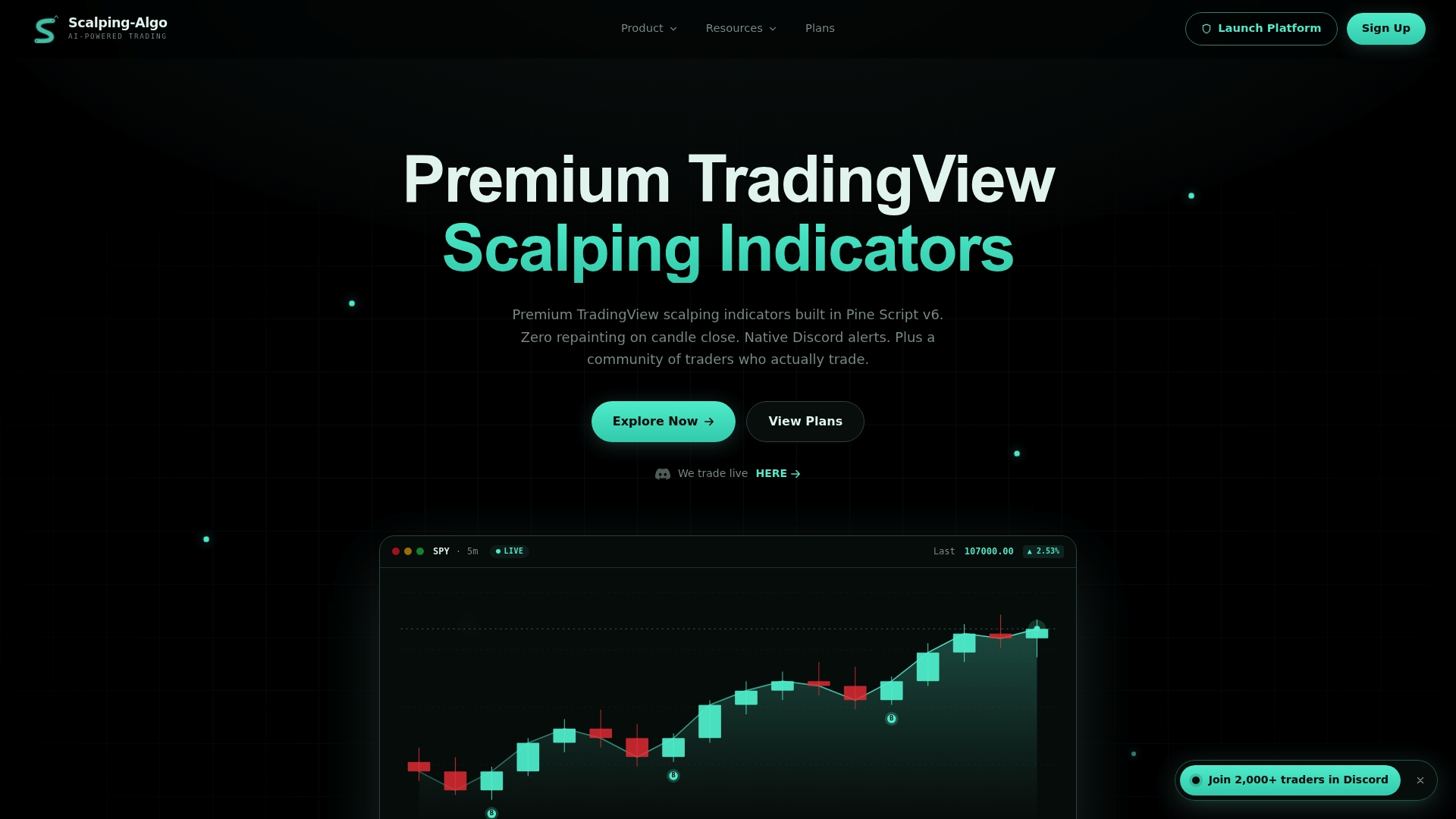
Open-source scripts handle the automation layer. Scalping-algo handles the signal precision layer. The platform's premium TradingView indicators, built in Pine Script v6, generate real-time, non-repainting buy and sell signals optimized for 1-minute to 15-minute timeframes across crypto, forex, indices, and futures. These indicators integrate directly with open-source execution frameworks via native webhook alerts, so your automation stack gets cleaner entry and exit signals without manual interpretation. The Smart Scalping Signals indicator adds confluence filtering and volatility gating on top of whatever open-source strategy you are already running.
FAQ
What are open-source trading scripts?
Open-source trading scripts are publicly available codebases that automate trading strategies, backtesting, and order execution. They are free to use, modify, and distribute, with no vendor licensing fees.
How much can traders save by switching to open-source tools?
Retail traders can replace proprietary trading stacks costing over $2,600 per month with free open-source repositories that provide equivalent institutional-grade infrastructure.
Are open-source trading scripts safe to use?
Open-source scripts are as safe as the practices you apply. Store API keys locally in environment files, use paper trading before going live, and code hard drawdown limits into every execution script.
Can beginners use open-source trading scripts without coding experience?
AI tools like GPT-4o and Claude 3.5 generate and debug trading code from plain English descriptions, making open-source scripts accessible to traders with minimal programming background.
How do open-source scripts compare to proprietary trading platforms?
Open-source scripts offer full code transparency, zero licensing costs, and unlimited customization. Proprietary platforms offer polished interfaces and vendor support but restrict code access and charge ongoing fees.