
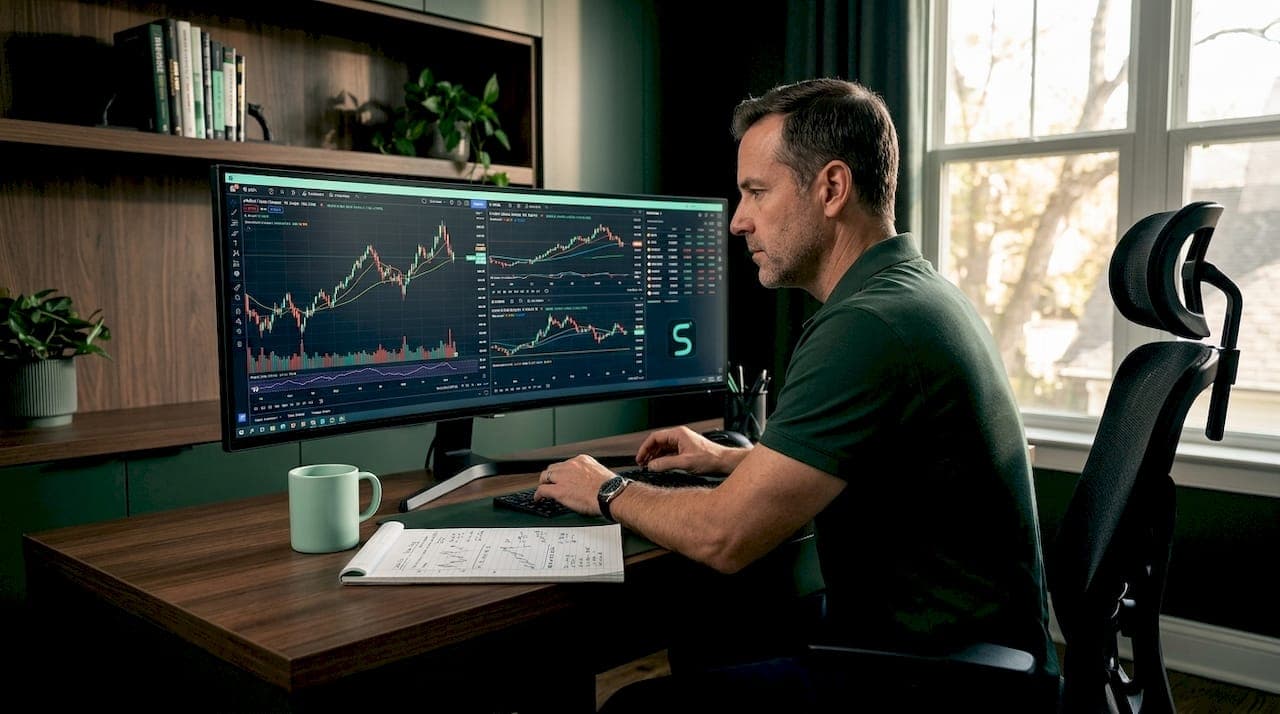
Trading psychology is defined as the set of mental and emotional strategies that govern how traders make decisions under pressure, manage risk, and sustain discipline across market conditions. Most retail traders focus almost entirely on technical setups and indicators, yet 91% of scalpers lose money not because their strategies fail but because their minds do. The most effective trading psychology tips target specific cognitive biases, build pre-committed behavioral rules, and create feedback loops that turn emotional patterns into measurable data. Platforms like TradesViz and tools like structured trade journals give traders the infrastructure to act on these insights consistently.

1. Recognize the cognitive biases costing you money
The disposition effect is one of the most destructive forces in retail trading. It causes traders to sell winning positions too early and hold losing ones too long, producing a measurable baseline drag of 2.67 percentage points on performance, amplified by 10% after significant past losses. That amplification is the doom loop: losses make the bias worse, which creates more losses.
Three biases account for the majority of preventable trading errors:
- Disposition effect. You lock in small gains and ride losses hoping for a reversal. The emotional anchor is your entry price, not the current market reality.
- Overconfidence. Overestimation of performance is the strongest predictor of excessive trading risk, particularly among traders who rely heavily on technical analysis. More trades do not mean more edge.
- Loss aversion. Losses feel roughly twice as painful as equivalent gains feel rewarding. This asymmetry distorts position sizing, stop placement, and exit timing.
Awareness alone does not fix these biases. The goal is to design rules that remove emotion-driven decisions at the exact moments these biases activate. Recognizing the trigger is step one. Building a system around it is step two.
"The key to breaking trading biases is designing rules and systems that remove emotion-driven decisions at critical moments." — SignalShieldHQ
2. Build a trade journal that tags emotional states
A trade journal that only records entry price, exit price, and P&L misses the most useful data. Systematic journaling that links emotional states to trade outcomes lets you visualize and quantify the psychological patterns costing you money. Tagging trades with labels like FOMO, planned, or revenge trading shows measurable P&L impact by mental state.
Here is a practical journaling process to follow every session:
- Pre-trade rating. Before entering any position, rate your confidence, anxiety, and focus on a 1 to 5 scale. Write one sentence on why you are taking the trade.
- In-trade note. If you modify a stop or extend a target mid-trade, note the reason and your emotional state at that moment.
- Post-trade tag. Label the trade: planned, FOMO, revenge, overconfident, or disciplined. Add the outcome.
- Weekly review. Sort your journal by emotional tag. Calculate average P&L per category. The numbers will tell you exactly which mental states are costing you the most.
- Monthly pattern check. Look for cycles. Revenge trading often clusters on specific days or after specific loss thresholds.
Tagging emotional regimes in your journal promotes deeper recognition of performance patterns than simple outcome tracking. TradesViz is built specifically for this kind of emotional tagging and pattern analysis.
Pro Tip: Set a hard rule that you cannot enter a trade until your pre-trade journal entry is complete. This 60-second pause alone interrupts impulsive entries.
3. Implement cooldown and lockout rules before you need them
Revenge trading is a behavioral loop triggered by losses that leads to impulsive, emotionally driven trades. The critical word is "triggered." It happens fast, and by the time you recognize it, you are already in a bad position. Pre-written cooldown rules stop this before it starts.
Effective cooldown and lockout rules include:
- 30-minute post-loss cooldown. After any trade that hits your maximum loss threshold, you are locked out of the platform for 30 minutes. No exceptions.
- Two-strike session lock. If you break your trading plan rules twice in one session, the session ends. Close the platform and log the reasons.
- Daily max loss limit. Define a hard dollar or percentage amount. When you hit it, trading stops for the day. This is non-negotiable and set before the session opens.
- Escalating cooldowns. After a second consecutive losing session, extend the cooldown to 24 hours. After a third, review your journal before trading again.
Pre-written cooldown rules and journal prompts completed before sessions reduce the likelihood of revenge trading. The mechanism is simple: you pre-commit to the rule when you are calm, so your future emotional self cannot override it. Writing these rules into a physical checklist or a trading plan document makes them harder to ignore in the heat of a losing streak.
4. Calibrate confidence to actual evidence
Overestimation distinguishes traders at moderate-to-high risk of excessive trading from those who trade within healthy parameters. This is not about being pessimistic. It is about matching your confidence level to your actual track record.
| Overconfident behavior | Calibrated behavior |
|---|---|
| Increasing position size after a win streak | Keeping position size fixed to the trading plan |
| Adding to a losing trade to "average down" | Cutting the position at the predefined stop |
| Trading more frequently when feeling sharp | Sticking to the session's maximum trade count |
| Skipping confirmation signals on "obvious" setups | Requiring all checklist criteria before entry |
Psychological states affect exposure decisions more than trading frequency. Two traders can place the same number of trades but carry vastly different risk because one is sizing up during positive emotional states and the other is not. Positive anticipation reduces cash holdings; negative affect increases them. Monitoring your position size and cash retention across different emotional states reveals this pattern clearly.
Pro Tip: After every 20 trades, calculate your actual win rate and average R:R. Compare it to what you believed it was before the review. The gap between perceived and actual performance is your overconfidence score.
5. Use a pre-session checklist as a discipline anchor
A trading psychology checklist is not a formality. It is a behavioral contract you make with yourself before market open. Traders who use a structured checklist before each session make fewer impulsive decisions because the checklist forces a moment of deliberate thinking before the market creates emotional pressure.
A practical pre-session checklist covers five areas. First, review your max loss limit and confirm it is set in your platform. Second, check your emotional state using your journal rating system. Third, identify the two or three setups you will trade today and the conditions required for each. Fourth, confirm your position sizing is consistent with your current account risk rules. Fifth, set your session end time and commit to stopping when it arrives regardless of P&L.
Removing individual stock decisions eliminates emotional anchors like purchase price recognition, which is the same principle behind a checklist. You replace real-time emotional judgment with pre-committed criteria. This is how professional trading desks operate, and it is directly accessible to retail traders through a simple document or a platform like Notion or Google Docs.
Pair your checklist with a solid risk management framework to cover both the psychological and structural sides of discipline.
6. Manage exposure, not just trade count
Most traders track how many trades they take. Few track how their emotional state shapes the structure of those trades. Psychological influences manifest more in exposure decisions and portfolio structure than in trade frequency. Your reviews need to include both dimensions.
Exposure management means tracking position size relative to account equity, the number of correlated positions open simultaneously, and cash retention across different market conditions. A trader running three correlated long positions in crypto during a high-volatility session carries far more real risk than their trade count suggests. Emotional states drive this kind of concentration without the trader consciously noticing.
Set hard rules for maximum simultaneous exposure. For scalpers, this typically means one to two positions open at any time on lower timeframes. Automated stops and alerts handle the mechanical side. The psychological side requires you to notice when you are sizing up because you feel good rather than because the setup justifies it.
7. Build mental toughness through visualization and acceptance
Mental toughness for traders is not about suppressing emotions. It is about accepting losses as a statistical certainty and preparing your mind to respond to them without reactive behavior. Visualization is one of the most underused tools in a trader's preparation routine.
Before each session, spend two to three minutes mentally rehearsing a losing trade. Picture the setup, the entry, the stop getting hit, and your response: closing the trade, logging it in your journal, and moving on without revenge trading. This rehearsal primes your nervous system to treat losses as expected events rather than emergencies.
"Owning the market through systematic rebalancing reduces emotional bias by removing individual decision points." — Evidence Investor
The same principle applies to your trading mindset. Develop a positive attitude toward process rather than outcome. A trade that followed your plan perfectly but lost money is a success by the only metric you control. A trade that broke your rules but made money is a failure that will cost you later. Reframing performance this way reduces the emotional weight of individual outcomes and builds the long-term resilience that separates consistent traders from reactive ones. Avoiding common scalping mistakes starts with this mindset shift.
Key takeaways
Consistent trading success requires pre-committed psychological rules, systematic emotional tracking, and calibrated confidence grounded in actual performance data.
| Point | Details |
|---|---|
| Bias recognition comes first | Identify disposition effect, overconfidence, and loss aversion as the three primary performance killers. |
| Journal emotional states, not just outcomes | Tag every trade with a mental state label to reveal which emotions cost you the most money. |
| Pre-commit cooldown rules | Write lockout and cooldown rules before the session so your emotional self cannot override them. |
| Calibrate confidence to evidence | Review actual win rate and R:R every 20 trades to close the gap between perceived and real performance. |
| Manage exposure structure | Track position size and correlated risk, not just trade count, to see how emotions shape your real risk posture. |
What I've learned about trading psychology that most guides skip
Most trading psychology content tells you to "control your emotions" and leaves it there. That advice is structurally useless. Emotions are not a switch. They are a signal, and the real work is building systems that intercept that signal before it becomes a bad trade.
I have seen traders spend months reading about cognitive biases and still blow up accounts because self-awareness without structure rarely suffices. The disposition effect does not disappear because you know its name. It disappears when you set a hard stop and a system that executes it regardless of how you feel about the trade. The rule does the work, not the insight.
The traders I have watched improve fastest share one habit: they treat their journal as a performance database, not a diary. They are not writing about feelings. They are tagging data points. When they review it weekly, they are running analysis. That shift from reflection to measurement changes everything. You stop asking "why did I do that?" and start asking "under what conditions does this pattern appear and what is its P&L impact?"
The other thing most guides miss is that emotional resilience builds slowly and non-linearly. You will follow your cooldown rules for two weeks and then break them on a bad Friday. That is not failure. That is data. Log it, find the trigger, and tighten the rule. The traders who quit at that point were treating psychology as a problem to solve once. The traders who improve treat it as an ongoing calibration process.
— Tran
How Scalping-Algo supports your trading discipline
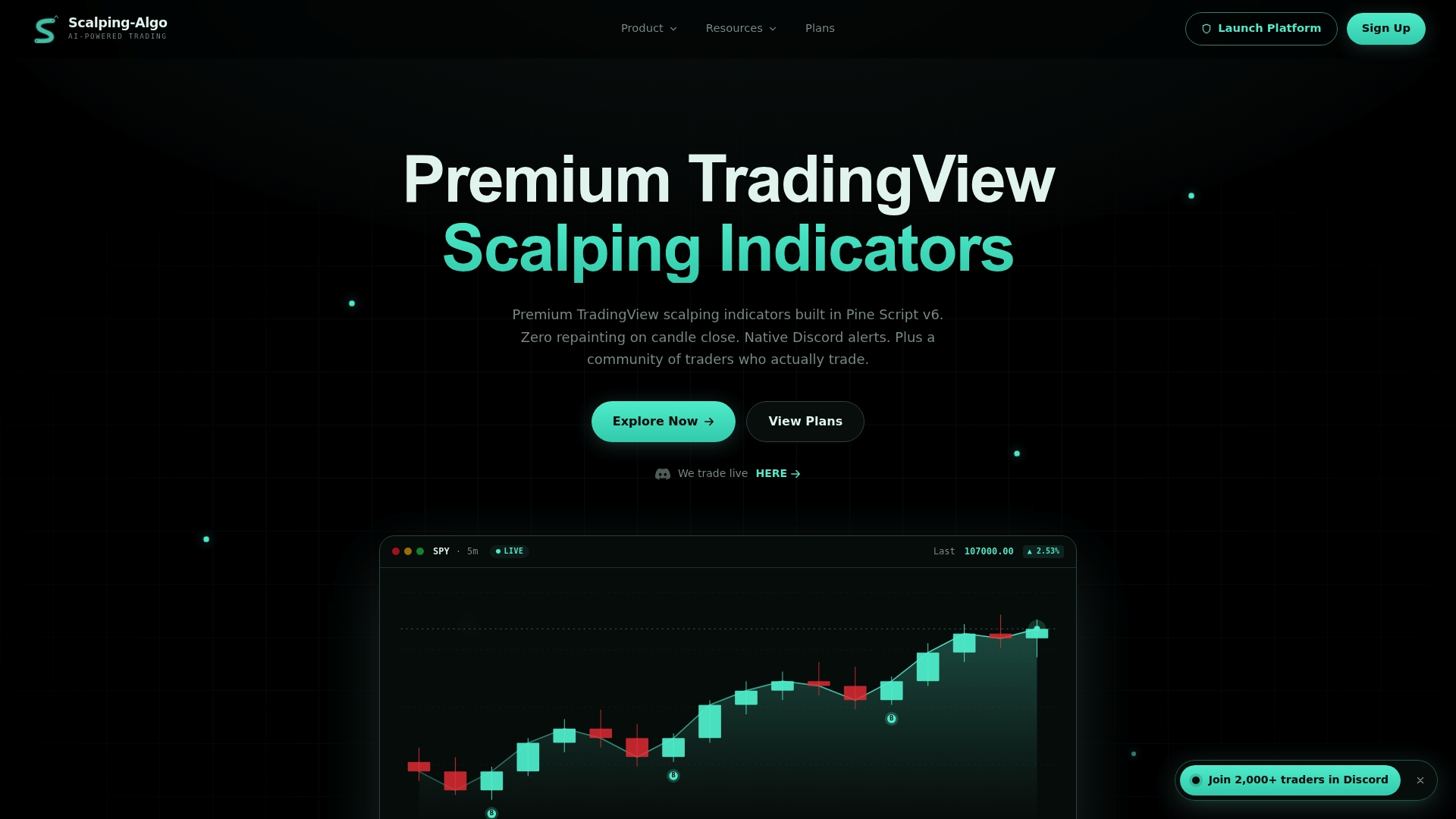
The psychological edge you build with journaling and cooldown rules works best when your technical execution is equally structured. Scalping-Algo's premium TradingView indicators generate real-time, non-repainting buy and sell signals on 1m to 15m timeframes, removing the guesswork that feeds overconfidence and impulsive entries. The Algo Master system combines three indicators into a rules-based framework that enforces entry criteria before you act, which directly supports the pre-session checklist discipline covered in this article. Native webhook alerts integrate with Discord so your cooldown and max loss rules can trigger automated notifications. The community and education resources reinforce the mindset habits that behavioral finance research consistently identifies as the foundation of long-term trading performance.
FAQ
What are the most important trading psychology tips for beginners?
Start with three rules: write a pre-session checklist, set a daily max loss limit, and tag every trade with an emotional label in your journal. These three habits address the most common psychological barriers in trading before they compound into larger losses.
How does the disposition effect hurt retail traders?
The disposition effect causes traders to sell winners too early and hold losers too long, creating a measurable performance drag of 2.67 percentage points at baseline. The effect worsens by 10% after significant past losses, making it self-reinforcing.
Can overconfidence actually predict excessive trading?
Yes. Overestimation of performance is the strongest predictor of excessive trading risk in technical analysis contexts, according to logistic regression analysis. Calibrating confidence to actual win rate and R:R data is the direct countermeasure.
How do cooldown rules stop revenge trading?
Pre-written cooldown rules work by pre-committing your response to a loss before the emotional trigger occurs. A mandatory 30-minute lockout after hitting a loss threshold interrupts the impulsive urgency that drives revenge trading before it can execute.
Why should traders track exposure instead of just trade count?
Psychological states influence exposure decisions more than trade frequency. Two traders placing the same number of trades can carry vastly different risk if one is sizing up during positive emotional states. Tracking position size and correlated holdings reveals the true risk profile emotions create.