

Multi-asset trading is defined as accessing and executing trades across multiple financial instrument categories, including equities, forex, commodities, bonds, and cryptocurrencies, all from a single unified account. The industry term for this practice is "multi-asset portfolio management," though traders commonly call it multi-asset trading. This approach has moved well beyond a premium feature reserved for institutional desks. Today, it is the baseline expectation for any serious individual trader responding to global economic cycles that move across markets simultaneously.
What is multi-asset trading and which asset classes does it include?
Multi-asset trading covers six primary asset classes, each with distinct behavior, liquidity, and trading hours. Understanding how they differ is the first step to using them together effectively.
- Equities: Stocks and ETFs trade on regulated exchanges with set session hours. They respond directly to corporate earnings, economic growth, and interest rate expectations.
- Forex (FX): The FX market runs 24 hours a day, five days a week. Currency pairs react to central bank policy, inflation data, and geopolitical events.
- Commodities: Oil, gold, and agricultural products trade on futures exchanges. Supply disruptions, weather events, and geopolitical tension drive their price swings.
- Bonds: Government and corporate bonds move inversely to interest rates. They act as a stabilizer in portfolios during equity market stress.
- Cryptocurrencies: Bitcoin and other digital assets trade around the clock. They show correlation to risk assets like equities during volatile periods, which surprises many traders who expect them to act as a hedge.
- Futures and CFDs: Derivative instruments that allow exposure to any of the above with margin, often used for hedging or short-term speculation.
Each asset class carries a different liquidity profile. Forex is the most liquid market in the world. Certain commodity futures can gap sharply on low volume. Managing these differences from one account requires real attention. Complexity grows exponentially compared to single-asset trading, and traders who underestimate this pay for it in missed margin calls and poorly timed exits.
Cross-asset correlations add another layer. During normal market conditions, gold and equities often move independently. During a crisis, correlations can spike, and assets that appeared uncorrelated suddenly move together. That creates hidden concentration risk that single-asset tools cannot detect.

What are the key benefits of multi-asset trading for individual traders?
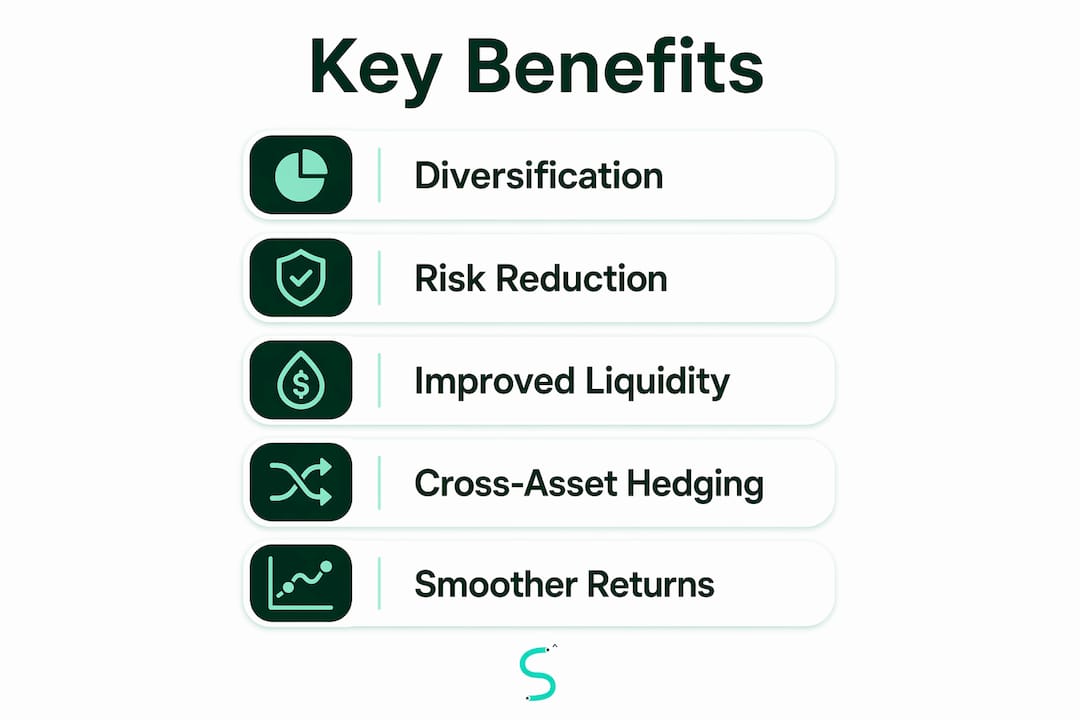
The benefits of multi-asset trading are concrete and measurable. Here are the five that matter most for individual traders.
-
Diversification reduces portfolio volatility. Spreading capital across assets that respond differently to economic forces lowers the chance that one bad trade wipes out your account. Enhanced risk management through diversification is the primary reason traders adopt this approach.
-
Hedging across markets becomes possible. You can short equity index futures to offset a long FX position during a risk-off period. That kind of cross-market hedge is only available when you trade multiple asset classes from one account.
-
Operational efficiency saves time and reduces errors. One account, one margin pool, one reporting dashboard. You stop reconciling positions across three separate platforms and focus on trading decisions instead.
-
Flexibility to respond to global economic shifts. When the Federal Reserve signals a rate hike cycle, bond prices fall, the dollar strengthens, and growth stocks come under pressure. A multi-asset trader can reposition across all three markets in one session.
-
Technology has made this accessible to individuals. What once required an institutional prime brokerage relationship is now available through modern retail platforms with unified margin and real-time cross-asset analytics.
Pro Tip: Diversification only works when your assets are genuinely uncorrelated. Holding five different tech stocks alongside a tech ETF is not diversification. True multi-asset diversification means selecting instruments that respond to different economic drivers, not just different tickers.
Knowing why diversifying trading strategies produces smoother results helps you build a portfolio that holds up across different market regimes, not just bull markets.
What makes a multi-asset trading platform effective?
The platform you choose determines whether multi-asset trading works for you or against you. Not all platforms are built equally for this purpose.
Effective platforms share these core capabilities:
- Unified order management: All asset classes managed from one interface with consistent order types and execution logic.
- Cross-asset risk engine: The platform aggregates your total exposure across instruments and calculates margin requirements in real time. Platforms lacking cross-asset margin aggregation risk disjointed margin calls that catch traders off guard.
- Real-time correlation analytics: You need to see how your positions relate to each other, not just their individual P&L.
- Automated back-office processing: Futures rollovers, dividend adjustments, and corporate actions should process automatically. Manual workflows at scale create errors.
- Regulatory compliance per asset class: Each asset class operates under different regulatory regimes. The platform must handle margin frameworks that comply with the rules governing each instrument you trade.
Speed and data quality matter too. A platform that shows stale quotes on one asset class while another updates in real time creates execution risk. Security and uptime are non-negotiable when you hold positions across multiple markets overnight.
Pro Tip: Before committing to any platform, test its margin calculation during a simulated high-volatility event. Open positions across three asset classes and check whether the margin engine updates instantly or lags. A slow risk engine in a real crisis is the same as no risk engine at all.
Understanding market volatility and how it affects each asset class separately is critical before you start trading them together.
How do you build effective multi-asset trading strategies?
Strategy construction in multi-asset trading goes beyond picking a few different instruments. The goal is to combine assets that respond to different economic forces so that your portfolio holds value across multiple market conditions.
Modern portfolio management blends assets based on economic responsiveness rather than fixed allocations. The old 60/40 stock-bond split was built for a low-volatility, low-inflation world. That model breaks down when bonds and equities fall together, as they did in 2022. Two allocation frameworks have replaced it for active traders.
| Framework | Core Logic | Best Used When |
|---|---|---|
| Risk Parity | Allocate by risk contribution, not dollar amount | Volatility is elevated across asset classes |
| Factor-Based | Weight assets by economic factor exposure (growth, inflation, rates) | Macro regime shifts are underway |
Risk parity gives equal risk weight to each asset class rather than equal dollar weight. That means bonds get a larger allocation because they are less volatile, while commodities get a smaller one. The result is a portfolio that does not blow up when one asset class has a bad quarter.
Factor-based allocation goes deeper. You identify which economic forces drive each asset, then build a portfolio that is not overexposed to any single factor. Equities carry growth risk. Commodities carry inflation risk. Currencies carry interest rate risk. Crypto carries liquidity and sentiment risk. A well-constructed multi-asset portfolio spreads exposure across all four.
Correlation monitoring is the ongoing work. Cross-asset correlations during volatile periods can create unexpected concentration risks that single-asset tools miss entirely. You need to check correlations regularly, not just at portfolio construction. A formal exposure monitoring plan accounts for differing liquidity, session hours, and regulations per asset class.
Rebalancing completes the cycle. Set a schedule, quarterly at minimum, and adjust positions back to target weights. Without rebalancing, a strong equity rally will leave you overexposed to equities heading into the next downturn. Your risk management checklist should include correlation review and rebalancing as standing items.
Key Takeaways
Multi-asset trading is the most effective way for individual traders to manage portfolio risk across global economic cycles, but it requires a unified platform, genuine diversification, and active correlation monitoring to work.
| Point | Details |
|---|---|
| Core definition | Multi-asset trading means managing equities, forex, commodities, bonds, and crypto from one account. |
| True diversification | Select assets with different economic drivers, not just different names, to avoid hidden concentration risk. |
| Platform requirements | A unified risk engine with cross-asset margin aggregation is non-negotiable for safe multi-asset trading. |
| Strategy frameworks | Risk parity and factor-based allocation outperform the traditional 60/40 model in volatile markets. |
| Ongoing monitoring | Review cross-asset correlations regularly because they shift during volatile periods and can create surprise exposure. |
My take on multi-asset trading in 2026
The biggest mistake I see individual traders make is confusing access with strategy. A platform that lets you trade forex, crypto, and commodities does not automatically make you a multi-asset trader. It makes you a trader with more ways to lose money if you have not done the correlation work.
The second mistake is trusting correlations that worked in the past. Gold and equities moved independently for years. Then they did not. Crypto was supposed to be an uncorrelated asset. During the 2022 risk-off period, it fell harder than most equities. These relationships shift, and traders who treat historical correlation as permanent get caught.
What actually works is treating multi-asset trading as a discipline, not a feature. That means building a formal process: define your economic factor exposures, set position limits per asset class, monitor correlations monthly, and rebalance on a schedule. Technology has made the execution side easier. The thinking side is still your job.
The platforms available to retail traders in 2026 are genuinely powerful. Unified risk engines, real-time cross-asset analytics, and automated back-office processing are no longer exclusive to institutional desks. The playing field has leveled. The traders who win are the ones who use these tools with a clear framework, not just a bigger menu of instruments.
— Tran
Scalping-algo's tools for multi-asset traders
Traders who want to act on multi-asset opportunities need signals that work across different instruments without lag or repaint.
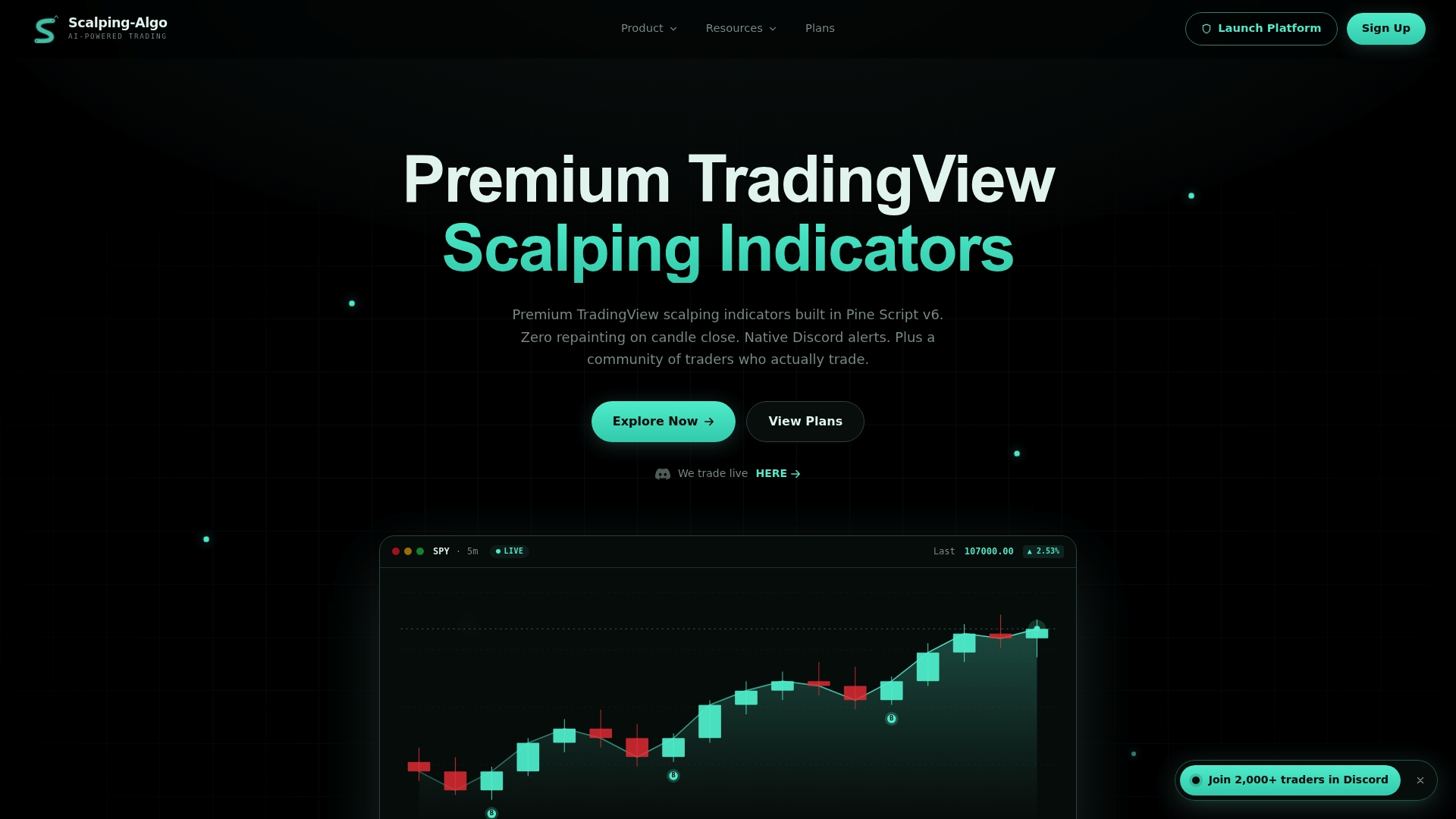
Scalping-algo's premium TradingView indicators are built in Pine Script v6 and designed to generate real-time buy and sell signals across crypto, forex, indices, commodities, and futures. The volatility gating feature filters out low-quality setups during choppy sessions, which matters when you are monitoring multiple markets at once. The Algo Master suite combines three indicators with divergence detection and confluence tools, giving you a structured framework for entries and exits across asset classes. Native webhook alerts push directly to Discord so you never miss a signal while watching another market.
FAQ
What is multi-asset trading in simple terms?
Multi-asset trading means buying and selling different types of financial instruments, such as stocks, forex, commodities, and crypto, from a single account and platform rather than managing separate accounts for each.
How does multi-asset trading reduce risk?
Spreading capital across asset classes that respond to different economic forces lowers the chance that one market event damages your entire portfolio. Hedging across markets, such as shorting equity indices while holding long FX positions, adds another layer of protection.
What is the difference between multi-asset trading and single-asset trading?
Single-asset trading focuses on one instrument category, like only trading forex or only trading stocks. Multi-asset trading combines several categories, which requires a more sophisticated platform and a formal approach to correlation and exposure monitoring.
Do individual traders need a special platform for multi-asset trading?
Yes. An effective platform must include a unified risk engine, cross-asset margin calculation, and real-time analytics. Platforms without these features create operational risks like disjointed margin calls and stale pricing across instruments.
What are the most common multi-asset trading strategies?
Risk parity and factor-based allocation are the two frameworks that have replaced the traditional 60/40 stock-bond model. Both focus on balancing economic factor exposure rather than fixed dollar weights, which produces more stable results across different market regimes.