

Most beginner traders lose money not from bad luck but from predictable, repeatable errors. 70–90% of retail traders lose money, with 67% of those losses traced directly to five avoidable mistakes: overleveraging, skipping stop losses, overtrading, revenge trading, and strategy switching. This beginner trading mistakes list covers 12 of the most damaging errors you will face, why each one hurts your account, and exactly how to fix it. Whether you trade crypto, forex, or futures, the patterns are the same.
1. What are the most critical risk management mistakes beginners make?
Risk management errors are the fastest way to blow an account. They are also the most fixable once you understand the rules.
Overleveraging positions
High leverage amplifies both gains and losses. Using leverage above 1:100 is a primary driver of retail account wipeouts. Most beginners treat leverage as free money. It is not. A 1% move against a 1:100 leveraged position wipes your entire margin. Start with leverage of 1:5 or lower until your win rate is proven.

Skipping stop losses
A stop loss is not optional. Stop loss orders must be placed simultaneously with your entry as bracket orders, not added after the fact. Waiting to "see how it plays out" removes your risk control entirely. Every trade you enter without a stop is a trade with unlimited downside. Learn the mechanics in this stop loss placement guide before your next entry.
Ignoring position sizing
The 1–2% risk per trade rule is the foundation of professional risk management. That means if your account is $5,000, you risk no more than $50–$100 per trade. Calculate your position size based on your stop loss distance, not on how confident you feel. This guide on position sizing and risk walks through the exact math.
Pro Tip: Set your stop loss and position size before you enter any trade. If you cannot define your risk in advance, do not take the trade.
2. How do psychological pitfalls cause trading failures?
Emotional decisions destroy accounts that solid strategies should protect. Discipline beats intelligence in trading. Emotional traps like fear, greed, and stubbornness turn good setups into high-risk gambles.
Revenge trading
Revenge trading is the act of placing impulsive trades immediately after a loss to "win back" money. It is one of the leading causes of account wipeouts. The fix is a mandatory rule: after 3 consecutive losses or a 3% daily drawdown, stop trading for 24 hours. This break is not optional. It is a circuit breaker that keeps one bad session from becoming a catastrophic one.
FOMO and emotional entries
Fear of missing out pushes beginners into trades after the move has already happened. You buy the top of a breakout because you do not want to miss the run. The result is a late entry with poor risk-to-reward. The solution is a pre-defined entry checklist. If the setup does not meet your criteria, you pass. There will always be another trade.
Stubbornness and refusing to adapt
Holding a losing trade because you "know it will come back" is not conviction. It is stubbornness. Successful traders cut losses fast and let winners run. Stubbornness reverses that equation. If your thesis is wrong, exit. Protecting capital is more important than being right. Read more on managing these traps in this trading psychology guide.
Pro Tip: Write down your reason for entering every trade before you enter it. If you cannot articulate a clear reason, you are trading on emotion.
3. Which strategy mistakes keep beginners from consistent profits?
Strategy errors are subtle. They do not always cause immediate losses. They erode consistency over time until your edge disappears entirely.
Trading without a plan
A trading plan defines your entry criteria, exit criteria, position size, and maximum daily loss. Without one, every decision is improvised. Improvised decisions are emotional decisions. Almost any strategy with positive expectancy can work if executed with discipline and strict risk management. The real problem is inconsistent execution, not the strategy itself.
Strategy hopping
Switching strategies after a few losing trades is one of the most common beginner trading blunders. No strategy wins 100% of the time. Strategy hopping destroys consistency by preventing you from ever accumulating enough data to know if your approach actually works. Commit to one strategy for at least 50–100 trades before evaluating it. Use this strategy building resource to build something worth sticking to.
Overcomplicating your setup
More indicators do not mean more accuracy. Experts recommend 1–2 primary indicators plus price action to avoid analysis paralysis. When your chart has 6 indicators all giving conflicting signals, you freeze. Simplicity creates clarity. Clarity creates execution. This breakdown on using trading indicators shows how to cut the noise.
Skipping the trading journal
Most beginners skip journaling because it feels tedious. That is a mistake. Journaling should focus on emotional and behavioral patterns, not just technical notes. You are looking for triggers: what emotional state were you in when you broke your rules? What time of day do you overtrade? A journal answers those questions. Without it, you repeat the same errors indefinitely.
Pro Tip: After each trading session, write one sentence about your emotional state during the session. Patterns will emerge within two weeks.
| Strategy mistake | Why it hurts | Fix |
|---|---|---|
| No trading plan | Every decision is improvised and emotional | Write entry, exit, and risk rules before trading |
| Strategy hopping | Prevents data collection on any single approach | Commit to 50–100 trades per strategy |
| Too many indicators | Creates conflicting signals and analysis paralysis | Use 1–2 indicators plus price action |
| No journal | Emotional triggers repeat undetected | Log emotional state after every session |
4. What analysis and execution mistakes do beginners often overlook?
These errors are less obvious than overleveraging or revenge trading. They show up in your results over weeks, not single sessions.
Ignoring fundamental analysis and news events
Technical analysis alone is not enough. Trading without fundamental analysis and ignoring economic calendars leads to unexpected losses during news events. A perfectly valid technical setup can be destroyed in seconds by a Federal Reserve announcement or a non-farm payrolls report. Check the economic calendar every morning before you trade. Mark high-impact events and either avoid trading during them or reduce your position size significantly.
Trading against the trend
Countertrend trading is a high-skill approach that most professionals avoid. Beginners attempt it constantly. Trading against the primary trend means you are fighting the majority of market participants. The odds are against you from the start. Identify the trend on a higher timeframe first, then look for entries in that direction on your trading timeframe.
Ignoring trading costs
Spreads, commissions, and overnight swap fees eat into profits in ways beginners rarely calculate. A strategy that looks profitable on paper may break even or lose money once costs are factored in. Before you trade any instrument, calculate the total cost per round trip. For scalpers trading high frequency, this number matters enormously. Review the full picture of capital protection principles to understand how costs compound over time.
Overtrading during low-probability periods
Successful traders make money by sitting, not trading. Waiting for quality setups rather than forcing trades during choppy, low-volatility periods is a defining trait of profitable traders. Overtrading inflates your cost exposure and increases the chance of emotional decisions. Set a maximum number of trades per day and stick to it.
| Execution mistake | Direct consequence |
|---|---|
| Ignoring news events | Unexpected losses from fundamental catalysts |
| Trading countertrend | Lower win rate against majority market flow |
| Ignoring trading costs | Profitable strategy becomes a losing one |
| Overtrading | Higher costs, more emotional decisions |
Key takeaways
Avoiding the most common beginner trading mistakes requires equal parts risk discipline, emotional control, and strategic consistency.
| Point | Details |
|---|---|
| Risk management is non-negotiable | Never risk more than 1–2% of your account per trade, and always use a stop loss. |
| Emotional control beats market knowledge | Revenge trading and FOMO cause more losses than poor analysis. |
| Simplicity creates consistency | Use 1–2 indicators and stick to one strategy for at least 50–100 trades. |
| Journaling reveals hidden patterns | Track emotional state after each session to identify behavioral triggers. |
| Trading costs are real losses | Calculate spreads and commissions before committing to any strategy. |
What I have learned from making every mistake on this list
I went through most of this list personally. Overleveraged early accounts. Revenge traded after bad sessions. Jumped between strategies every time I hit a drawdown. The losses were not random. They were predictable, and looking back, entirely preventable.
The shift happened when I stopped treating trading like a performance and started treating it like a process. That meant writing down every trade reason before entry. It meant taking mandatory breaks after losing streaks. It meant accepting that a boring, consistent strategy beats a clever, inconsistent one every time.
The traders I have seen improve fastest are not the ones who found a better indicator or a smarter entry. They are the ones who got serious about their trading rules foundation and stopped improvising. Discipline is not a personality trait. It is a system. Build the system, and the results follow.
The hardest part of this list is not understanding it. It is accepting that you are probably doing several of these things right now. That acceptance is where real improvement starts.
— Tran
Tools that help you avoid these mistakes from day one
Knowing the mistakes is step one. Having tools that enforce good habits is step two.
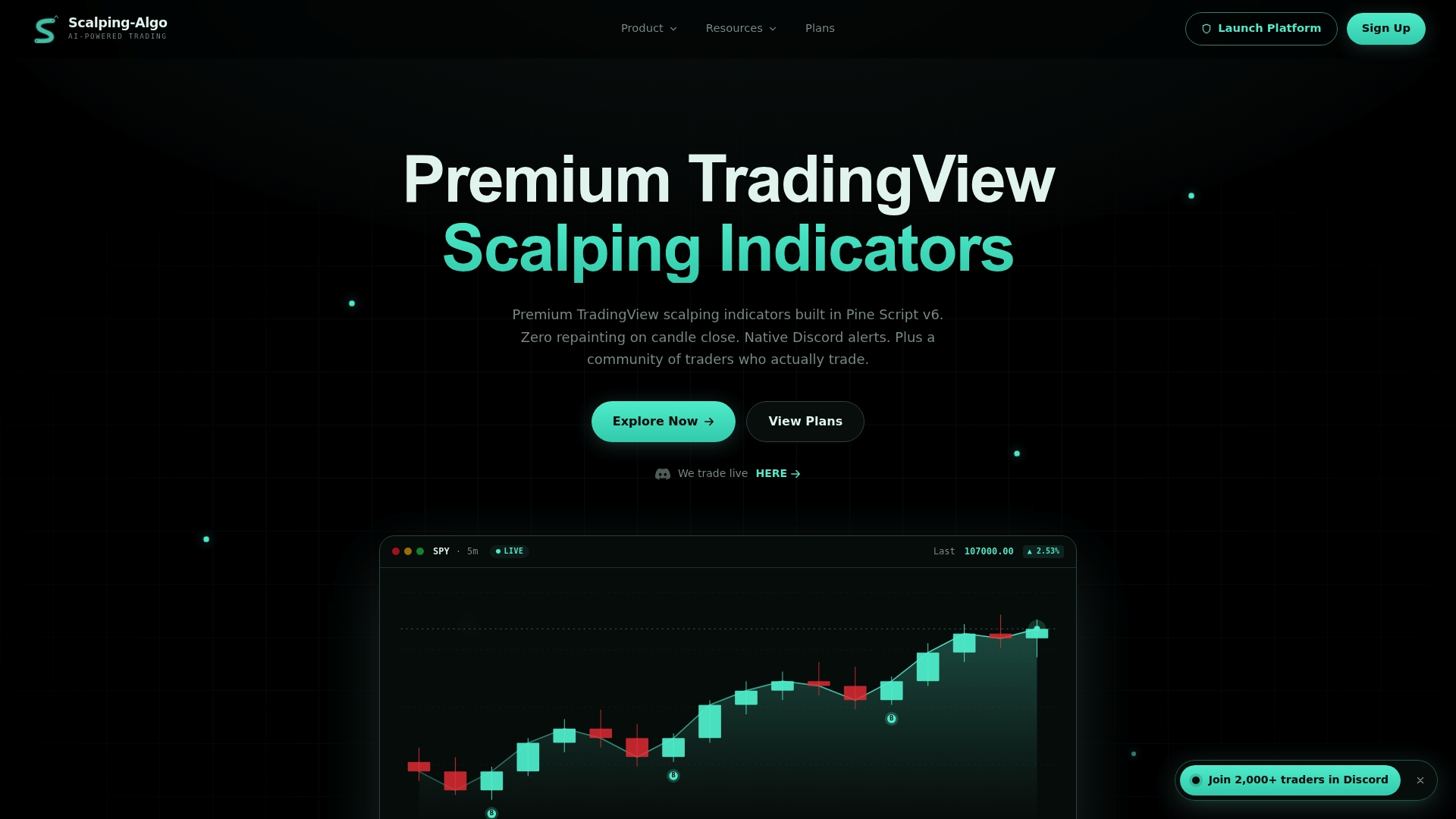
Scalping-algo builds premium TradingView indicators specifically designed to reduce the errors on this list. The indicators generate real-time, non-repainting buy and sell signals on lower timeframes (1m–15m), so you are not guessing entries or overcomplicating your chart. Built-in alerts support stop placement discipline, and the confluence tools filter out low-probability setups before you act on them. The Command Center dashboard also integrates backtesting and education resources so you can test your strategy before risking real capital. Explore the full suite at Scalping-algo's premium indicators and see how structured tools reduce emotional decision-making from the start.
FAQ
What is the number one beginner trading mistake?
Overleveraging is the single most destructive beginner error. Combined with skipping stop losses, it accounts for the majority of retail account wipeouts according to analysis of 50,000+ accounts.
How much should a beginner risk per trade?
Never risk more than 1–2% of your total account balance on a single trade. On a $5,000 account, that means a maximum loss of $50–$100 per position.
What is revenge trading and how do you stop it?
Revenge trading is placing impulsive trades after a loss to recover money quickly. Stop it by enforcing a mandatory 24-hour break after 3 consecutive losses or a 3% daily drawdown.
How many indicators should a beginner use?
Use 1–2 primary indicators plus price action. More indicators create conflicting signals and analysis paralysis, which leads to missed entries or impulsive decisions.
Does journaling actually improve trading performance?
Yes. A journal focused on emotional and behavioral patterns helps you identify the specific triggers that cause rule-breaking. Without it, the same mistakes repeat in every market condition.